First, an historic anniversary: it was 20 years ago today, Sgt. Pepper taught the band to play…um…actually, Bill Shepherd, Yuri Gidzenko, and Sergei Krikalev–aka Expedition 1–arrived at the new, small International Space Station (ISS) on 2-Nov-2000, beginning 2 decades of human habitation and research and ISS expansion in Earth orbit. At no time in the 21st century has there not been people living 400 km above us, traveling at nearly 8 km per second. Happy 20th anniversary, ISS! While you contemplate the first 2 decades of continuous human presence in space, consider the future possibility of traveling far beyond Low Earth Orbit (LEO) to other worlds…
In addition to exploring the Earth, Moon, Sun, and the rest of our local solar system, NASA explores the Milky Way galaxy, including Exoplanet Exploration. The “exo” in exoplanets refers to planets far outside our solar system, orbiting other stars many lightyears away (“light year” = distance light travels through space in a year = several billion kilometers or miles). It’s only been in recent decades that NASA has gained the technological tools to find and study exoplanets–so far nearly 4300 exoplanets confirmed in over 3K distant solar systems, and counting. Astronomers have long assumed that planets orbit other stars just like our local planets orbit the Sun, and now we know that planets are extremely common in our galaxy! Wonder if life is common as well?! TBD…
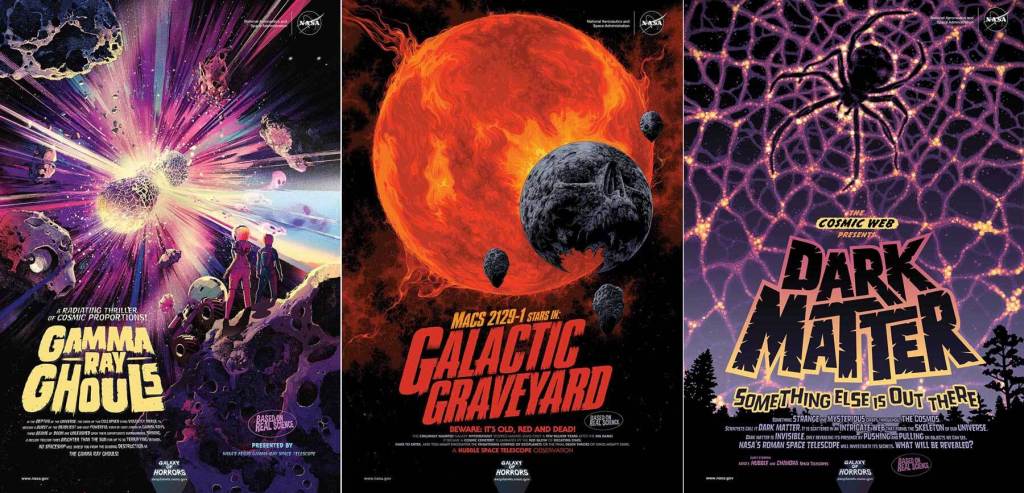
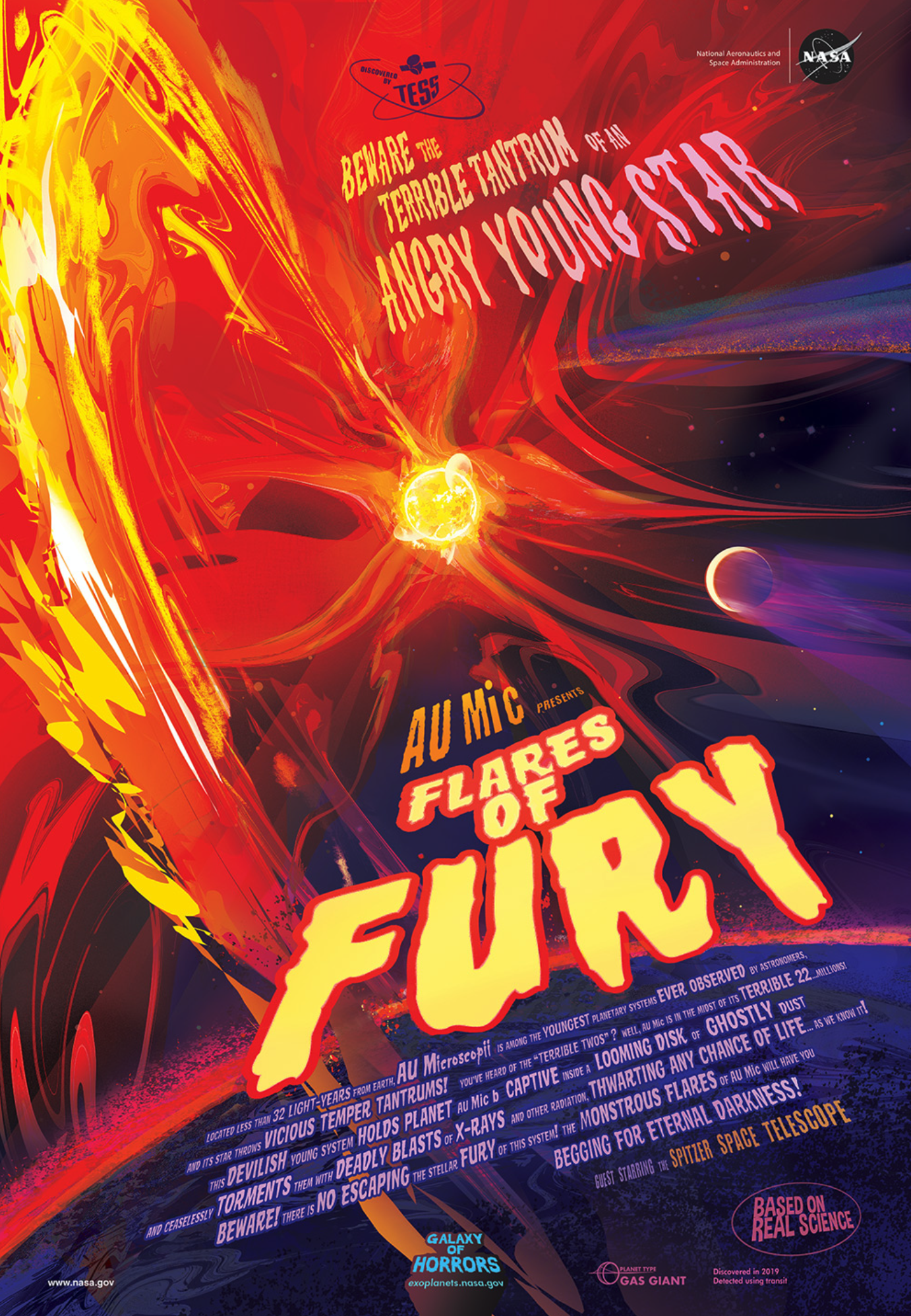
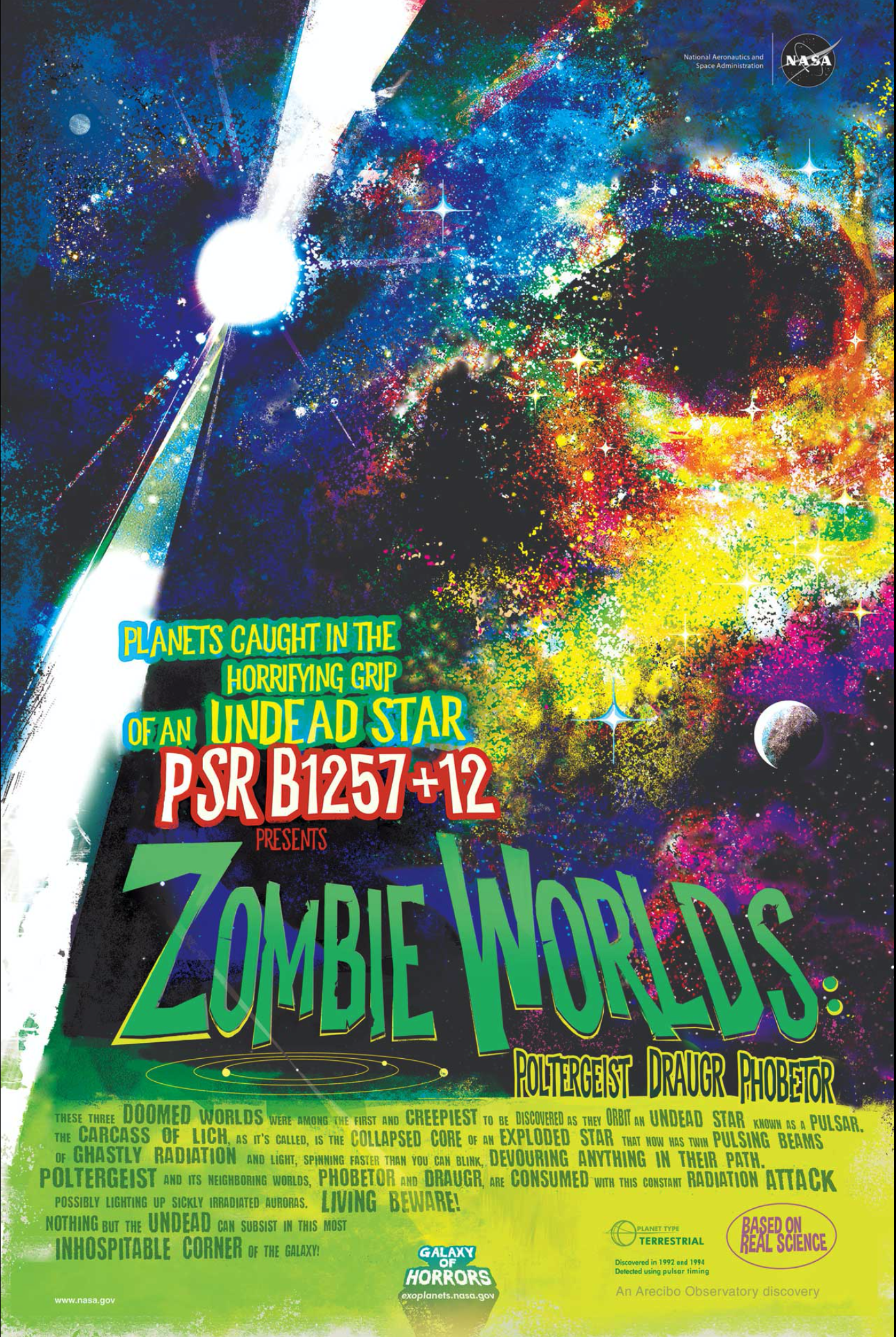
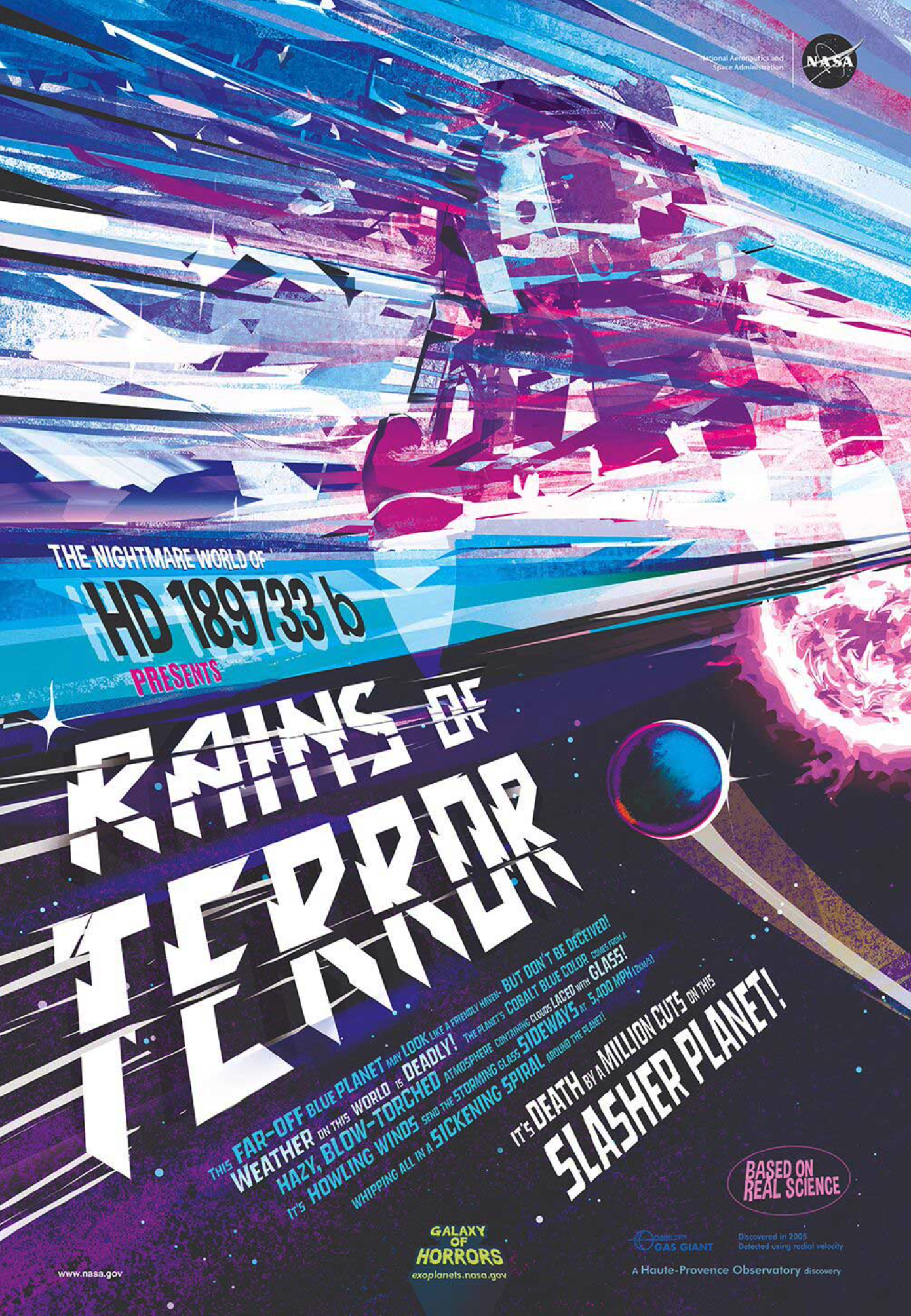
In the better late than never category: NASA’s way cool Galaxy of Horrors site offers downloadable “classic sci-fi/horror” style posters and interactive content so that you, too, can explore a few of the scarier exoplanets…if you dare. In addition to Gamma Ray Ghouls, Galactic Graveyard, and Dark Matter (Something Else is Out There!), check out Flares of Fury, Zombie Worlds, Rains of Terror and more. I’m pleasantly surprised to see NASA take this fun route for a little PR: HD 189733b just gained much more notoriety as “SLASHER PLANET!“

 Moonday