Family Sharing

Family members added to my Apple Family Sharing list get to use my purchased iPhone and iPad apps, iCloud storage, Music and News+ subscriptions and watch my purchased movies and shows, and vice versa. Instead of trying to explain this to some of my family members by phone or email (again), I thought I’d post a visual step-by-step guide for future reference by them and others.

Let’s start with my iPad home screen (below), in which I’ve highlighted Apple’s App Store, Music, News and Settings icons (your icon locations may vary). Using the same iPadOS 13.5.1 that I’m using will make it easier to follow along, so as a first step tap on Settings > General > Software Update and make sure your software is up to date; if not, go ahead and update it…I’ll wait here.

Now that our iPad software is matched, you’ll want to make sure your Family Sharing is turned on. In Settings, tap on your Apple ID/name at the top left, then on Family Sharing on the right. Below you can see that I’m already sharing with a few family members.
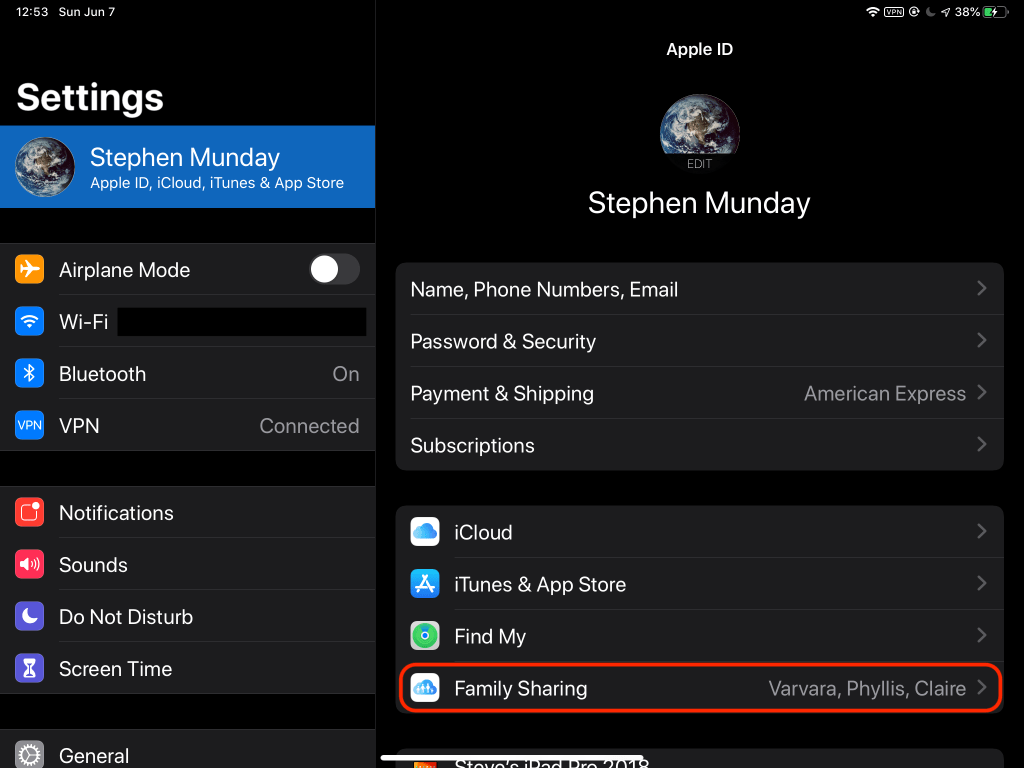
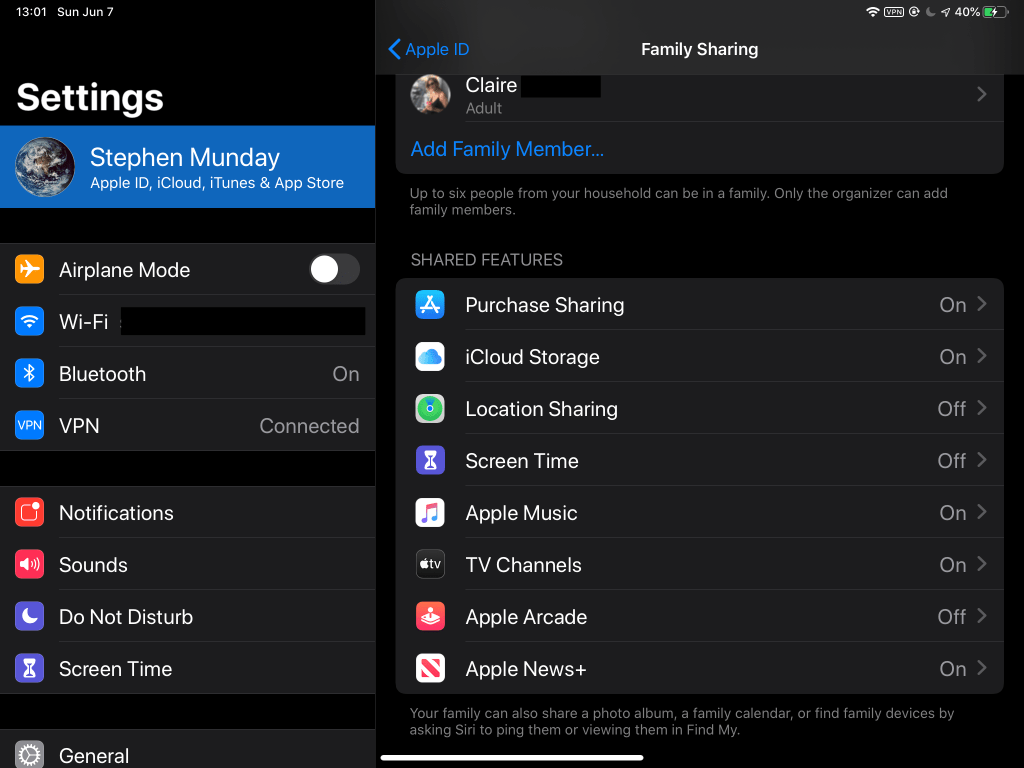
At the top of the Family Sharing window, you’ll see the Organizer (in my case, me), and any adult and child Family Members the Organizer has added, up to six people total. Scroll down and you’ll see all the available Shared Features. As shown below, I’m sharing my app purchases, my iCloud storage and Apple Music subscriptions, TV channels and movies, and my Apple News+ subscription. (I share my location on my iPhone that usually stays with me, so I have it turned off here on my iPad that usually stays home.) Go ahead and turn on your Purchase Sharing so that other Family Members can access your purchased apps.
Now we’ll close Settings, open the App Store, and tap on the Apple ID icon in the upper right, in my case mother Earth (your icon may vary).
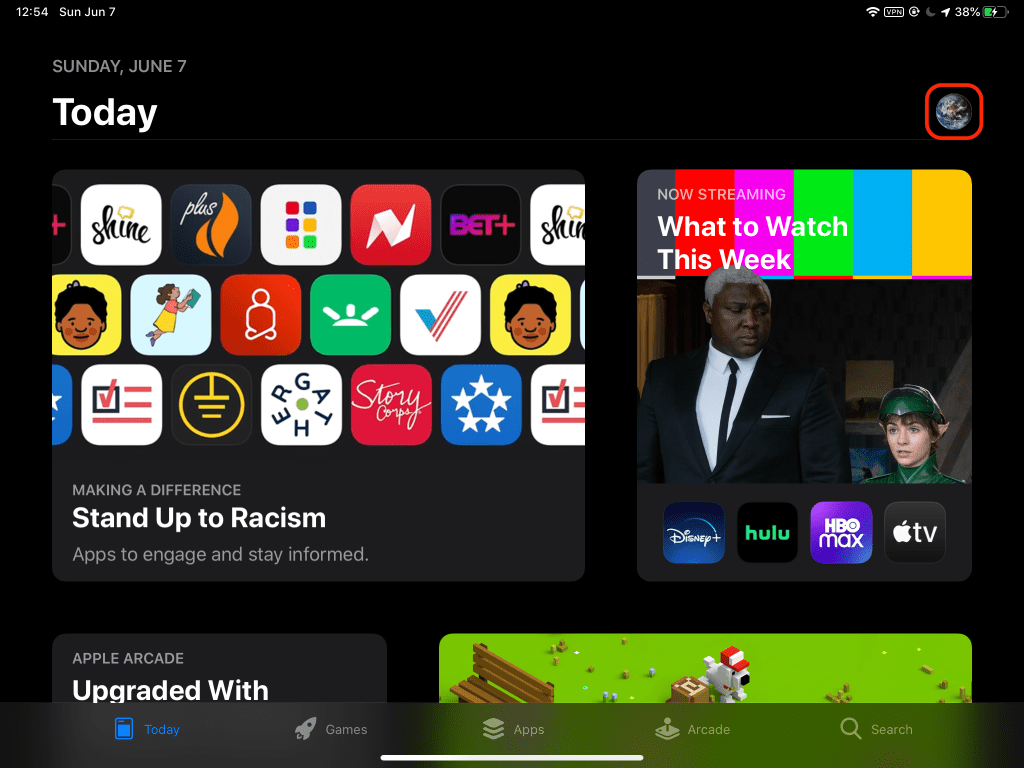
This brings up a smaller Account window in which you can tap Purchased. You could also tap Subscriptions just below that to see a list of all your active and expired subscriptions, handy for canceling subscriptions you may have forgotten about or no longer need, but that are still charging to your credit card, or to the Organizer’s card if you’re a Family Member.

Tapping Purchased provides a choice between My Purchases and Family Purchases listing Family Members who are sharing purchases. In my case, Phyllis and Varvara are sharing purchases, while Claire is not and does not appear here. I’ll tap Phyllis to see what apps she has to offer.
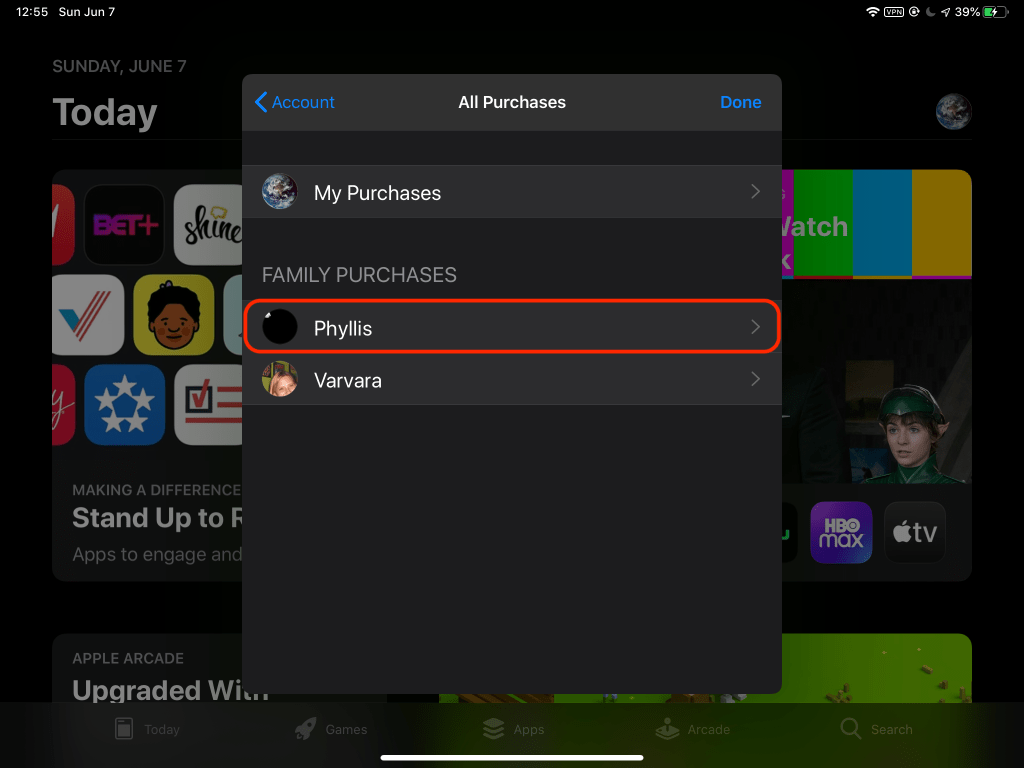
I get the scrolling list of Phyllis’ purchased apps shown below. Apparently Phyllis likes words and cards. I tap on “Not on this iPad” at the top of the sub-window to make sure I’m only seeing apps I don’t already have, apps that Phyllis bought and that I’m able to download for free from the App Store because of Family Sharing and Phyllis’ Purchase Sharing.
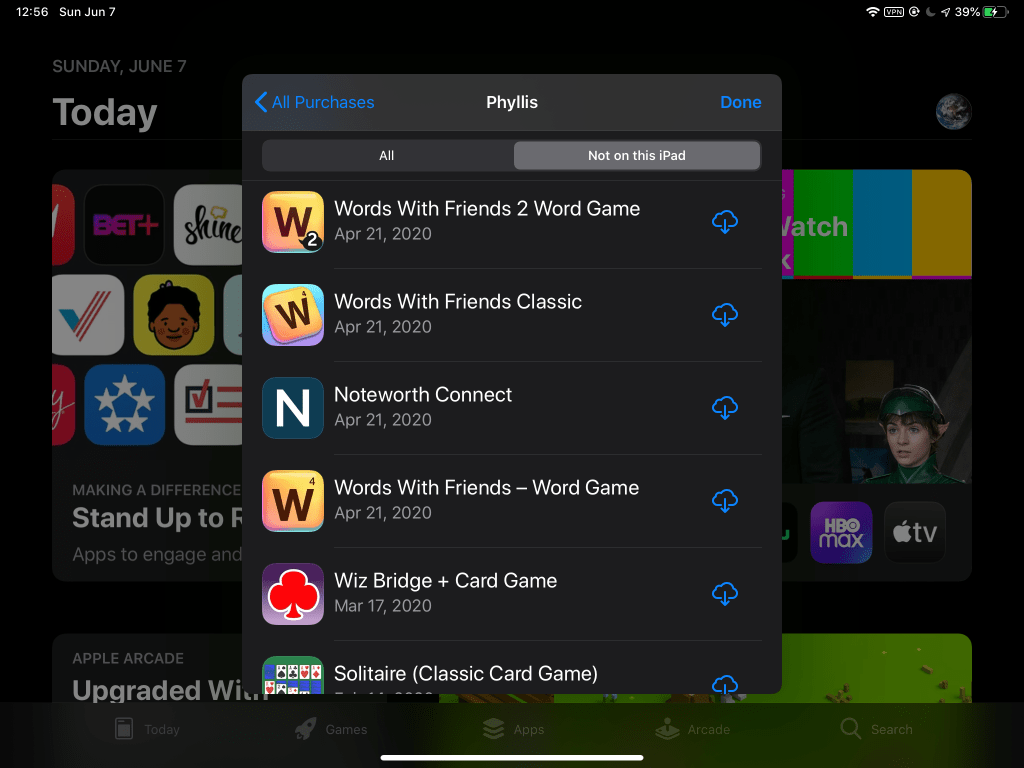
Hmmm…Words With Friends Classic…isn’t that basically Scrabble (yawn)? I can tap on the app icon on the left or title in the middle to see the app description, ratings, and other app information. Or, I can simply tap on the cloud with down arrow icon on the right to download the app immediately. The circular download progress icon appears for a few to several seconds, depending upon your broadband speed and the file size, and finally becomes an OPEN button when the app is downloaded and installed.
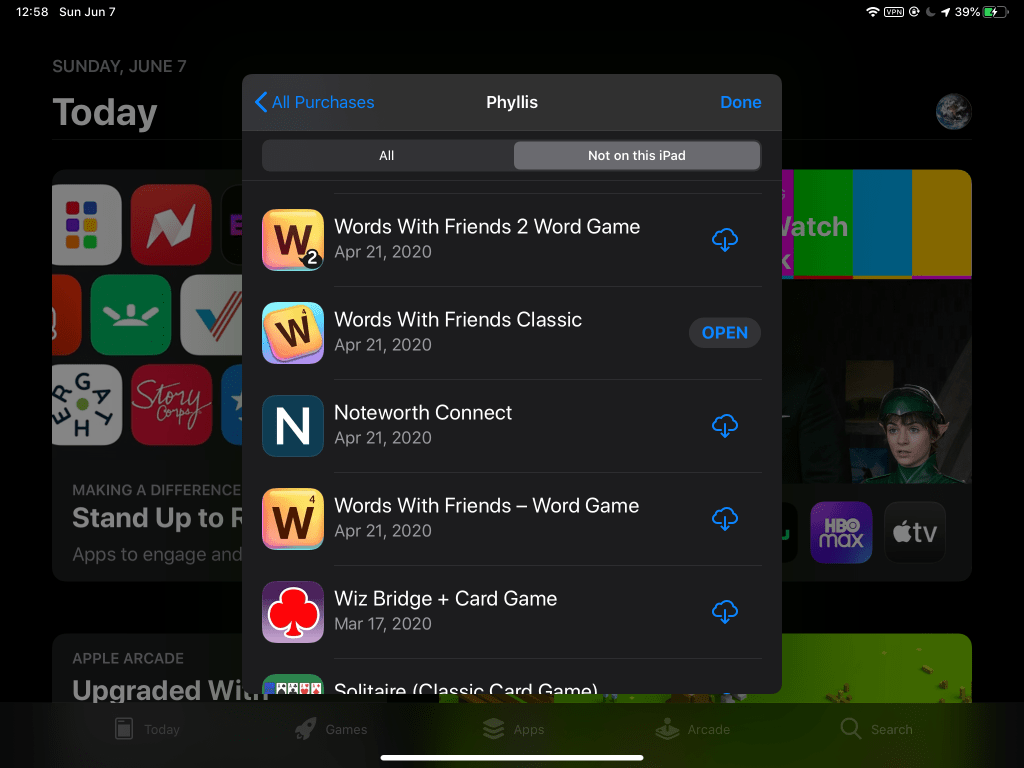
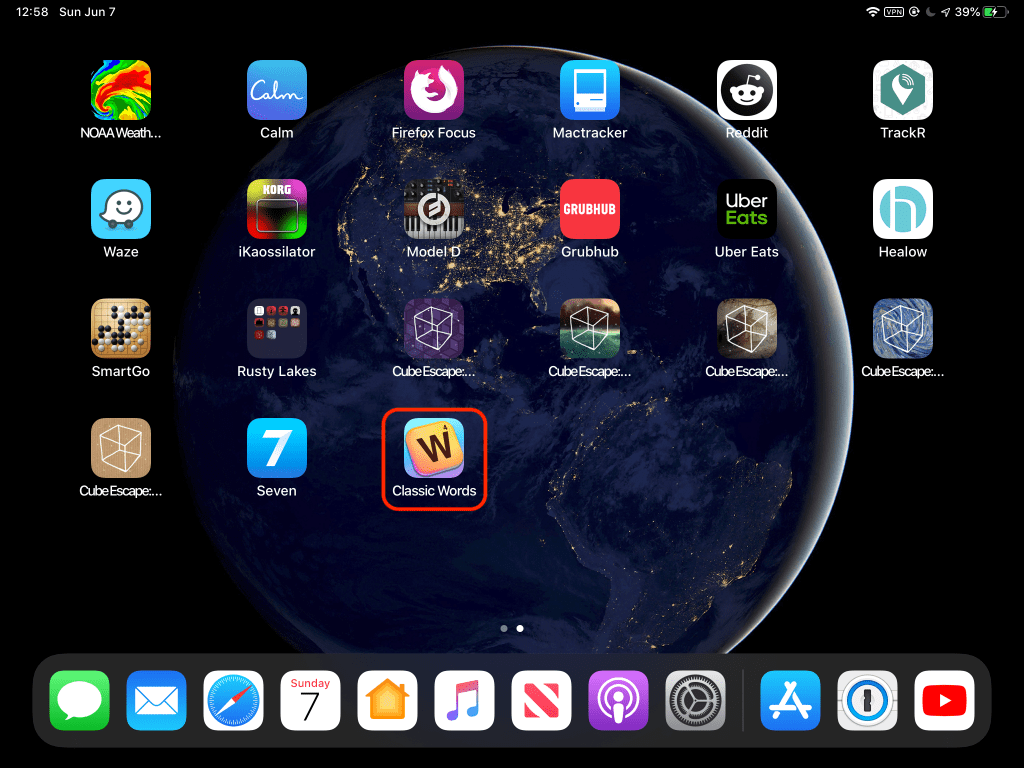
At this point, I could tap OPEN to open the app from here. Or, I could back to the iPad home screen and find and admire the newly installed app icon…then delete it because, you know, Scrabble (yawn).
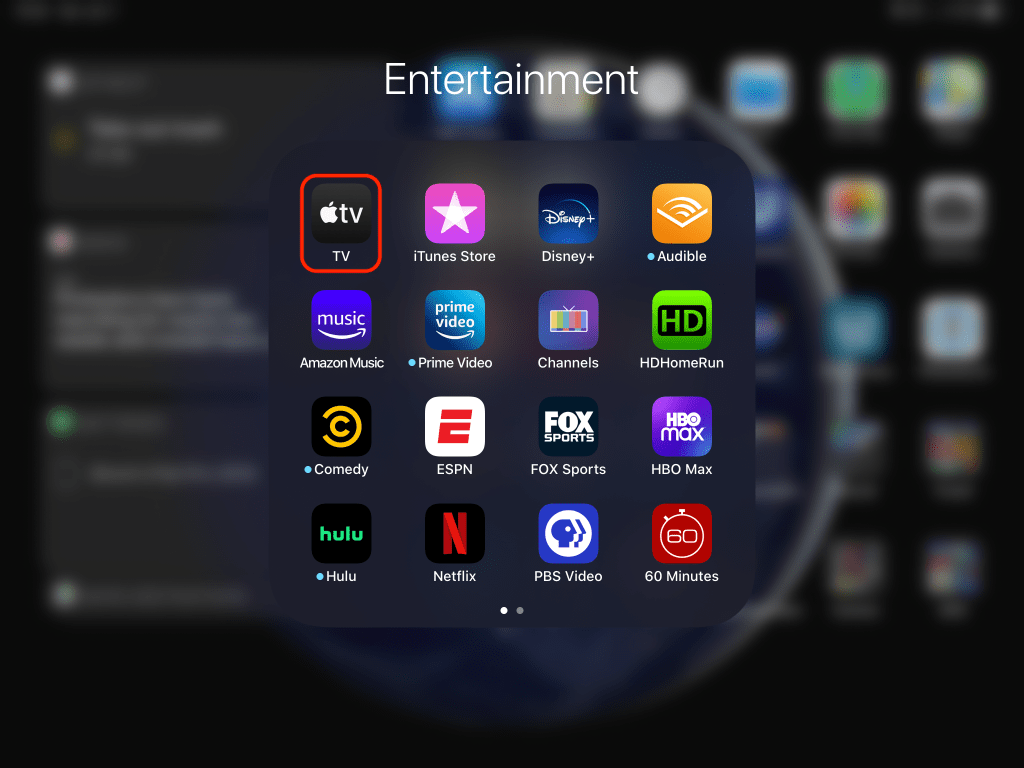
Let’s move on from shared apps to TV shows and movies. Tap and open the Apple TV app. Mine is in my Entertainment folder, but your location will vary.
In the Apple TV app, tap on Library at the bottom, then Family Sharing on the left to see a list of Family Members who may or may not be sharing anything.
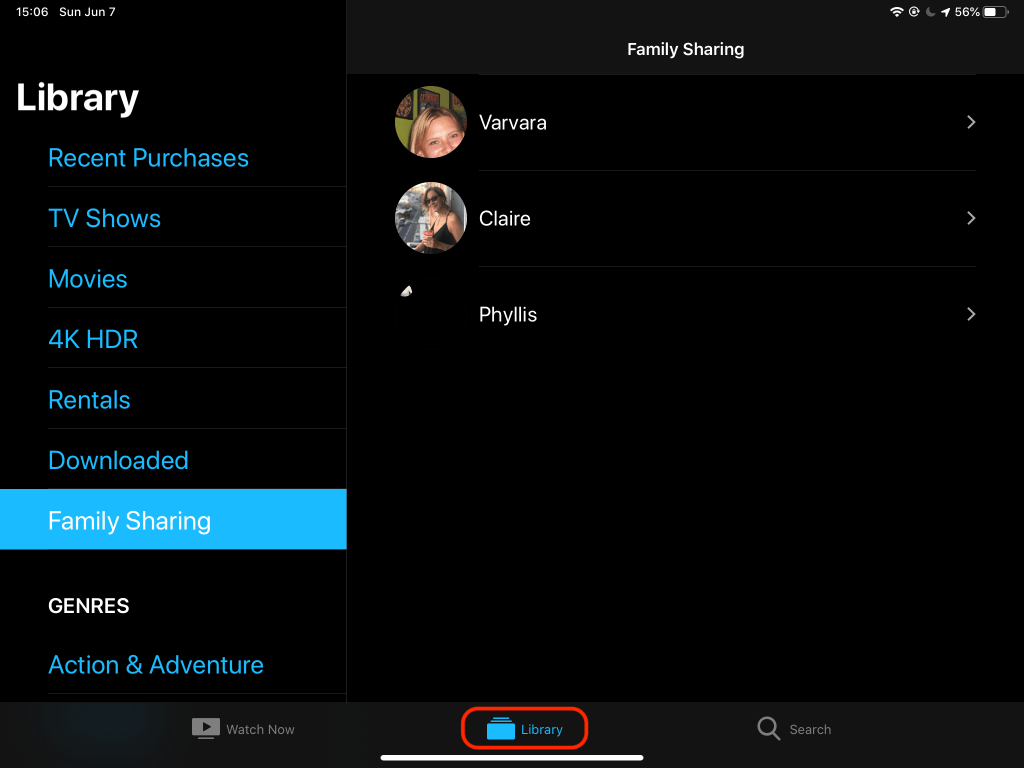
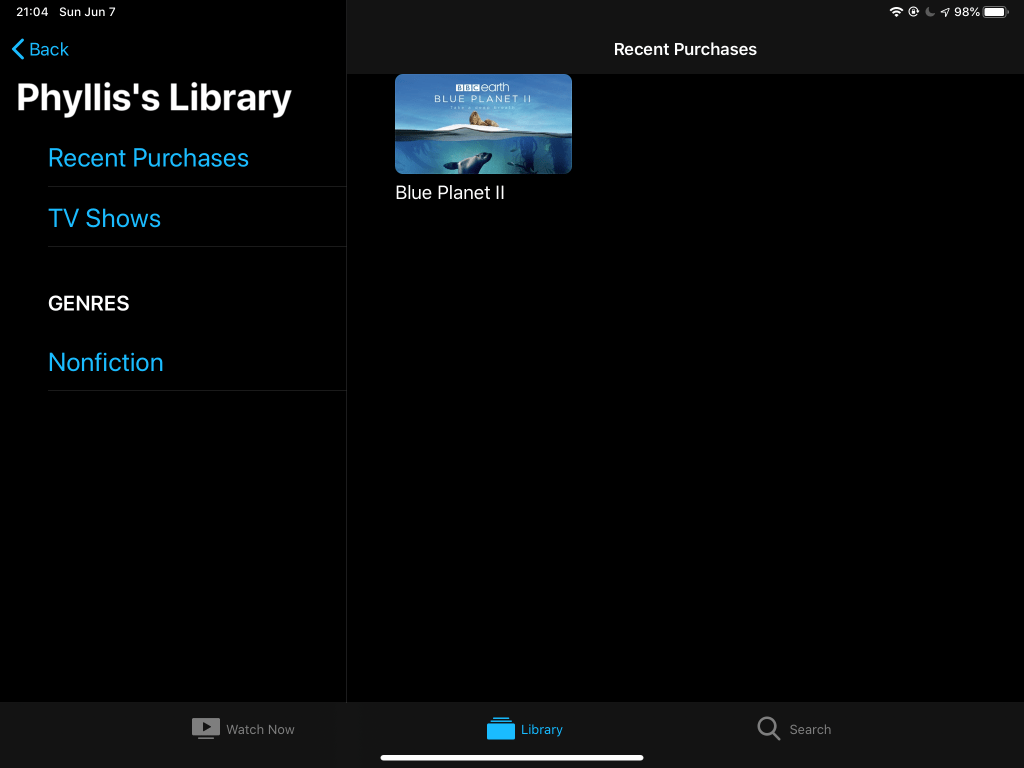
When I tap on Varvara, I get a message, “No TV Shows or Movies, Your library is empty…”, because she doesn’t buy or rent video content in Apple TV or iTunes. When I tap on Claire, I get a message, “Family Member Not Sharing, Claire is currently not sharing their purchases. They can change this in Settings.” She’s not a sharer, or inadvertently turned off Purchase Sharing in Settings > Apple ID > Family Sharing. When I tap on Phyllis, I see her entire library consisting of one Blue Planet II show trailer that I installed on her iPad as a test long ago. I could download and watch it on my iPad from here. Fortunately for my Family Members, they see a much larger selection of TV shows and movies when they tap on my name in the Apple TV app, including Apple’s original shows in my Apple TV+ subscription. (We recently enjoyed M. Night Shyamalan’s creepy Servant series in Apple TV+.)
Finally, Apple Music and Apple News+ are much easier to share and use: once the Organizer has shared them, all Family Members can simply open these apps and use the subscription services. Apple Music has about 50 million songs in all genres, as well as a For You section that learns your tastes and offers playlists and artists. Apple News+ includes most major news outlets and–what really sold me–many magazines, including a few I used to subscribe to separately, but now get as part of my Apple News+ subscription. Back on the home screen, find and tap to open Apple News (stylized red N on a white icon…see the first image at the top of this post), then tap News+ on the left to browse, search and read magazines in many genres. The image below shows I like Scientific American and Wired (two of my former subscriptions replaced by Apple News+), and if you could scroll this image to the right you’d see Motortrend, Forbes, Macworld, etc.
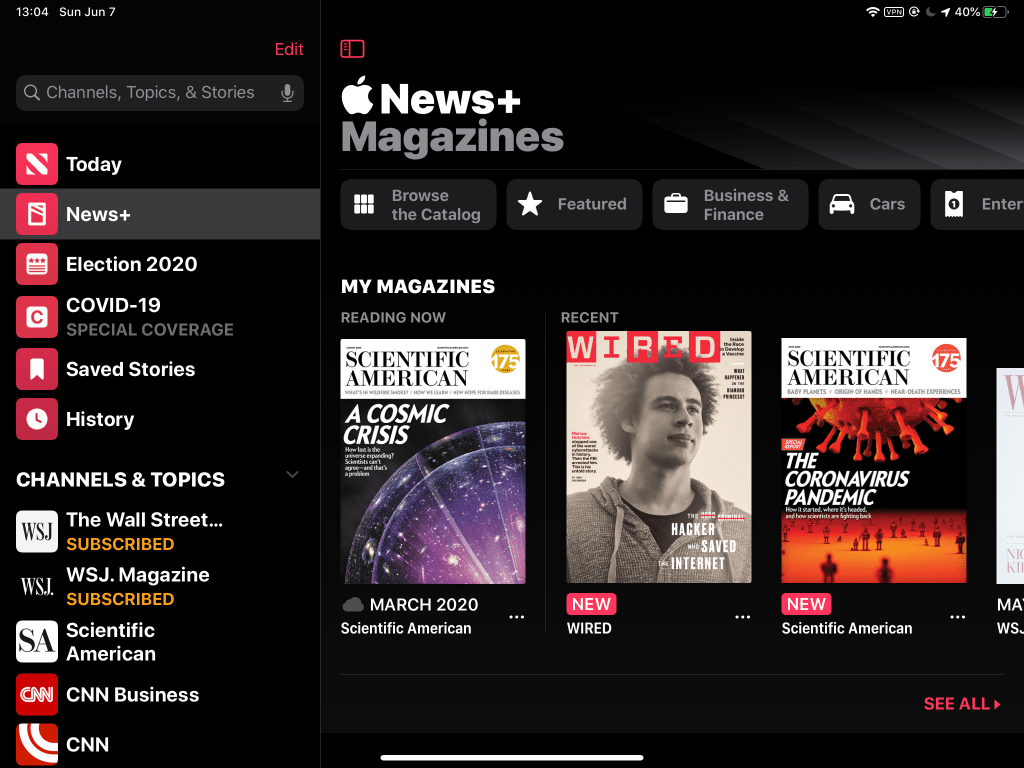
Apple has added Election 2020 and COVID-19 as special sections on the left side of Apple News for easy access to the latest-n-greatest news on these topics of mass interest. You can add or delete channels & topics in your list if you wish, or let Apple’s learning algorithm auto-pick them for you.

That should be all you need to get started with Apple Family Sharing on your iPad and iPhone. Happy sharing.
Simply Secure

NASA and other employers have reported that cyber attacks increased dramatically with the spread of the pandemic. Apparently, internet bad guys view millions of people teleworking from home, outside protected corporate or government networks, as an irresistible opportunity for stealing data and money. So, it is more important than ever to pay attention to your own security on your phone, tablet or computer, and your most important accounts, especially bank and email accounts. Here are some simple steps you absolutely should take. (Some info is from TWiT’s iOS Today #495.)

Longer is Better

While randomizing your passwords is great, lengthening them is even better. The longer a password, the harder it is for criminals to guess, and the more time it takes even the fastest supercomputer to crack with a “brute force” attack (e.g., extending minutes or hours of computer time into years or decades, impractical). As a simple example, you could guess *** in short order, especially if you knew part of it: ca*. However, you’d have a hard time guessing ******************************, even if you knew every other letter: *a*I*T*e*a*K*o*s*L*t*b*u*T*a*! Using a long phrase like CatInTheHatKnowsALotAboutThat! gives you a long, strong password that is still easy to remember. Add dashes or underscores between words to make it even longer, and misspell some words or replace a couple letters with similar looking numbers to mix it up a bit. Just be careful typing it if you don’t use password manager software as you should (more on that later).

It should go without saying: never reuse the same long password or passphrase for multiple accounts, lest a data breach in one account open your other accounts (and thus data, identity and money) to malicious hackers. Remember that your email account is effectively the key to your kingdom. Not only is it your username for many accounts, it’s where account password reset messages usually go, so a crook who gains access to your email may easily access your other accounts/data/identity/money. Guard your email account with a long, unique password, and…

Turn on Two Factor Authentication (2FA)!

If you do nothing else after lengthening your passwords, turn on 2FA (aka 2-step) for every account possible! This includes Amazon, Apple/iCloud, Google/Gmail, eBay, PayPal, Twitter, Facebook, your credit cards, your bank accounts, your iPhone/iPad (Settings > your name at top > Password & Security > Two-Factor Authentication)…everywhere! In this context, “factors” are what you use to prove (authenticate) you are you to some other person, company or computer system. Common identification or authentication factors:

  1. Something you have, e.g., driver license, passport, military ID, company badge, RSA token
  2. Something you know, e.g., debit card PIN, password, answers to security questions (bad)
  3. Something you are, e.g., biometrics like fingerprint, face scan, retina scan

You’re probably already using 2FA in everyday life without realizing it. Your ATM card uses 2FA, because it requires you to have your card and know you PIN to get cash. My office building has cypher locks that won’t let me enter unless I have my badge and know my PIN. (Highly secure facilities may use 3+ factors, but let’s stick with 2 for now.) Modern iPhones (that you have) use TouchID or FaceID (scanning what you are) to gain access to your data. Now that you’re a 2FA expert, use it where it is most important: your online accounts that hold your credit, money and identity! A cyber thief on the other side of the planet might be able to know your password (due to a corporate data breach beyond your control, or lazy you with your easily discovered pet’s name or breed PW), but they won’t have your phone or tablet, much less your finger or face (assuming those are still attached). Thus, 2FA is a simple way to create a big obstacle for bad guys and greatly increase your online security. NYT explains how protecting your internet accounts with 2FA keeps getting easier. If you haven’t already done it, do it, now.

When setting up 2FA in your online accounts, try to avoid using just security questions. So-called “security” questions are not secure because your answers–mother’s maiden name, grade school, first car model–are more easily discovered than you may think. If you can’t avoid such questions (unfortunately still in use by some bank systems), at least make up false, silly, unguessable answers that you’ll still remember, e.g., “favorite food” = “pink elephant” (one bite at a time). Likewise, try to avoid SMS text messages for 2FA. SMS texts are unencrypted, and savvy criminals can spoof your phone number to intercept such texts and steal that 2nd factor in transit. An Authenticator app (such as Microsoft Authenticator, Google Authenticator, or Authy) on your phone or tablet is a far better option for 2FA, as are email messages, though SMS texts and even security questions are better than nothing.

Here’s a rough ranking from best (most secure) to worst (least secure) 2FA options you may look for (thanks to Leo Laporte of TWiT.tv):

  1. Hardware token, e.g., YubiKey or RSA SecureID, for pros or tech-savvy computer users
  2. Biometrics, e.g., FaceID and TouchID, for people with faces and fingers
  3. Authenticator app, e.g., Authy, Google Authenticator, Microsoft Authenticator (my pref)
  4. SMS texts (if you must)
  5. “Security” questions (boo! bogus! shame on your bank!)

Use a Password Manager

Password managers make your digital life more secure and easier. A password manager is simply a software app that securely stores all of your account credentials (usernames and passwords) in an encrypted database on your device and/or in the cloud. TheWirecutter explains why you need a password manager, and recommends 1Password, which is what I use in my Apple-centric home (iPhones, iPads, Macs, Apple TVs, HomePod). LastPass and BitWarden are also highly rated. Password managers offer many advantages over your paper notebook or unencrypted Notes app, including:

  • Securely stores all of your login credentials (usernames & passwords) in an encrypted database that you easily access from any of your devices
  • Generates and remembers long, strong passwords for you, unburdening your brain while increasing your security
  • Automatically fills in your username and passwords on most web sites, eliminating your need to type or copy-n-paste
  • Securely stores other important card or ID info including credit cards, driver license, passports, rewards & membership cards, software licenses, vault codes/combinations, etc.
  • Creates shared/family password vaults for your trusted loved ones to access

What about letting your web browser store passwords as a “poor man’s password manager”? With most browsers, this is a bad idea, because they don’t store the password securely, encrypted, while you’re browsing the web. One exception is Safari, that correctly uses Apple’s Keychain to securely store passwords, but this is only useful for MacOS and iOS users, not for Windows and Android users. It is rumored that Keychain in iOS 14 will have true password manager features, presumably a free default for Apple iPhone and iPad users.

Recap

Being simply secure–more important in this time of pandemic and teleworking–is as easy as 1-2-3:

  1. Use long, unique passwords (or passphrases)
  2. Turn on 2FA (aka 2-step authentication)
  3. Use a password manager app

Bohemian Pandemic

Distractions during the worst(?) of the worsening pandemic…

Watch HBO for Free

Varya and I were avid fans/serfs of (most of) Game of Thrones, and now look forward to questioning our reality and humanity each week in Westworld, currently in its 3rd season. But HBO was leading the golden age of prestige television long before the robot Hosts’ bloody uprising and the Queen of Dragons’ fiery rampage. You might say this age started with the widely acclaimed Sopranos at the turn of the century (though I watched the series years later). Still, it was the first 4 seasons of the hard edged The Wire–arguably one of the best TV series ever produced, better than the more popular mob show in my book–that really hooked me on HBO content. I would purchase entire Wire and True Blood (guilty pleasure) seasons on iTunes, download them to my video iPod (still have a couple) in Moscow, hook it up to the old TV in my Energia Hotel room inside the Baikonur Cosmodrome, and binge watch (before that was a thing) through the long nights on the Kazakh Steppe. I missed the acclaimed Six Feet Under, didn’t quite get hooked on the comedies Barry and Veep (your mileage may vary), but loved the sharp, nerdy humor of Silicon Valley. HBO has made all of these bold TV titles and more (e.g., the highly rated Succession), plus some movies and documentaries (including a recent favorite, McMillion$, about the criminals who rigged the McDonald’s Monopoly game throughout the 1990’s), available for free streaming through the month of April. The How to Watch HBO for Free page is rather self-explanatory, and includes links for downloading HBO apps from the App Store or Google Play (HBO Go, a companion to cable/satellite TV, or what I use, the standalone HBO Now). Now you can binge watch HBO at no cost for at least 3 more weeks of the pandemic.

Musical Quarantine

Anything can inspire musicians, especially the comedic kind, even a deadly virus and the first (not last?) global pandemic of the 21st century. Here are a few favorite recent performances:

Finally, while there are many big names live-streaming virtual concerts during the pandemic, this Lockdown Session caught my eye and ear, as I haven’t seen or heard The Red Rocker in years: Won’t Get Fooled Again cover by Sammy Hagar & The Circle.

Hopefully we don’t get fooled again, learn from our lack of preparedness and slow response, get ready to quickly detect and control the next novel virus before it spreads into a pandemic. (See epidemiologist Dr. Larry Brilliant’s Wired interview and TED2006 Talk.)

After Pandemic

Assuming there is a future, and it’s only the end of the world as we know it (that song is stuck in my head), how will things change? Politico Magazine posted a survey of over thirty professors, authors and other big thinkers recently (19-Mar-2020): Coronavirus Will Change the World Permanently. Here’s How. Below is a summary of their predictions in several categories for a post-pandemic world, some good, some bad, some ugly, some overlapping. First, I’d recommend reading my previous, shorter post, During Pandemic, before diving into this one. Second, a disclaimer: I am not predicting or even espousing all of these, but merely summarizing and commenting on the prognostication of others’ crystal balls. Now, let us gaze into to the future…

Community

  1. Personal becomes dangerous
    • Georgetown Prof. Tannen predicts that after seeing the risk of touching strange things and crowds (don’t touch strangers, kids), we may not easily resume shaking hands, touching public surfaces and faces (especially strangers’ faces), or ignoring basic hygiene like routinely washing & disinfecting our hands (apparently no one did that before, judging from empty shelves at CVS).
    • Virtual meetings will be even more popular, as distance feels safer (and saves money on travel).
  2. New patriotism
    • Villanova Prof. Schrad hopes that battling on microbiological front lines will make medical professionals our heroes, risking and sacrificing their health and lives for ours.
    • Patriotism can mean supporting community health as much as fighting overseas.
  3. Less polarization
    • Columbia Prof. Coleman suggests (dreams?) that the societal shock of suffering mass pain and death, and eventually conquering this common enemy, will finally move us toward national solidarity and functionality.
    • I like silver linings, Doc, but if 9/11 and the Great Recession didn’t create lasting unity, will this shock be big enough? (Then again, a couple months of continuous “family time” will stress out many.)
  4. Return of serious experts
    • US Naval War College Prof. Nichols believes our society has been less serious recently due to peace (at home), money, and love of consumer tech/toys (iPhone X or 11?!).
    • Some politicians, cable news flame-throwers and conspiracy mongers capitalized by denouncing scientists, experts and experienced government functionaries for sport and ratings. It’s fun to mock experts…until the global pandemic arrives, and we’re suddenly desperate for knowledge and competence (OK, the Earth really is round and warming…save us, Dr. Fauci!).
    • Perhaps Americans will again value serious experts (when not watching doctors Phil & Oz). Then again, those who deny basic science and clear data can deny anything or anyone, so call my optimism more cautious, Doc.
  5. Less individualism
    • NYU Prof. Klinenberg thinks our trend of hyper-individualism and self-seeking behavior reverses with this pandemic (OK, but how does that help me?!), and we’ll become more communal, renewing investments in public (health) goods and services.
    • Maybe, Doc, but social media companies will continue telling their data harvesting sources and algorithmic manipulation targets (aka “customers”) that every uninformed thought, stupid act, and plate of grub is worth sharing with the entire planet. If our online surveillance economy incentivizes narcissism, it’ll remain tough for many to refocus on the common good.
  6. Religious worship will look different
    • Director Sullivan observes that social distancing and quarantine already challenge what passes for ministry and fellowship in all religions.
    • Expect more online congregations, an opportunity for people to sample distant sermons, or practice more contemplative meditation by themselves. (Speaking of which, check out the Calm app for mindful, relaxing meditation and sleep stories, including Matthew McConaughey‘s Wonder, so chill and soothing at bedtime…all right, all right, all…zzzzz).
  7. New forms of reform
    • Writer Mr. Rauch finds a lesson learned from the HIV/AIDS epidemic may apply to this pandemic: “plagues drive change,” including new organizations, networks, and knowledge bases that significantly change society.
    • We may see major changes in health care, with more emphasis on community and interdependence (a common theme in this list).

Tech

  1. Fewer regulatory barriers to online tools
    • Editor-in-Chief Ms. Mangu-Ward is sure the pandemic will sweep away obsolete regulations hindering some parts of online living, particularly more telemedicine and online learning and homeschooling (also common themes).
    • Progress in these areas has been hindered by legacy players and slow/lobbied politicians…who fortunately won’t be able to return the genie to the bottle after the pandemic forces activities online.
    • Many companies will discover that more teleworking options don’t reduce productivity as much as they feared. Though virtual meetings are less efficient than F2F for most folks, many teleworkers save a long commute, not to mention time for showering, shaving, make-up, hair, and dressing (teleworking is pants optional).
  2. Healthier digital lifestyle
    • MIT Prof. Turkle sees us rethinking our digitally created community (communal theme).
    • Famous musicians are streaming free live concerts, and inviting young hopefuls to send them performances. Temporarily free services and products (such as video streaming and audiobooks) are being provided online by corporations, entrepreneurs and yoga instructors.
    • Generosity and empathy take over the internet? (Not if online trolls and divisive pundits have any say!)
  3. Boon to virtual reality (VR)
    • Vassar Pres. Bradley would like to see VR grow from isolated gaming experiences to programs promoting socialization and mental health of the isolated and quarantined.
    • Instead of battling imaginary foes, VR goggles could put you in a classroom or community gathering, or on a psychologist’s couch (where you slay them with your Elven magic sword!).

Health/Science

  1. Rise of telemedicine
    • U of Penn Chair Dr. Emanuel sees remote medical office visits gaining widespread use and popularity as hospitals and clinics are overwhelmed by the pandemic.
    • Telemedicine benefits containment by keeping most people at home, away from critical care patients. (If it puts distance between me and my dentist, I’m in!)
  2. Stronger family care
    • Director Poo hopes the crisis will increase political support for Universal Family Care, a single public federal fund/payer that provides child/elder/disabled care and paid family leave.
    • Eliminate the choice between health and financial ruin for Americans without safety nets.
  3. Government becomes Big Pharma
    • Roosevelt VP Sterling argues the pandemic has exposed the failures of our costly, inefficient, market-based system for R&D and manufacturing of medicine that now takes ~18 months to develop a new vaccine.
    • Current emergencies create economic incentives, but not future ones. Private companies won’t/can’t prioritize countermeasure development for a health emergency until profitability is assured, typically well into the event when it is too late to prevent. (This reminds me of much cancer research funding targeting stage 4–seeking miraculous rescues from the edge of death–rather than stage 1, though early detection and response is much more effective.)
    • The fragility of supply chains for active pharmaceutical ingredients coupled with public outrage over patent abuses limiting availability of new treatments may create bipartisan consensus (Have you met Congress?!) for a government approach replacing ineffective market-based incentives for basic health needs.
  4. Science reigns again
    • Exec Director Trauss (like others in this list) believes the declining credibility of truth and science in recent decades will reverse due to this pandemic.
    • Even science doubters/deniers will see the mass pain and death, not to mention economic impacts, due to coronavirus, and the necessity of experts to fight it.
    • Expect at least partial restoration of public respect for expertise. (If only vaccines cured stupid.)

Government

  1. Congress can go virtual
    • MIT Prof. Zuckerman points out that we need Congress working through the crisis, but dispersed in relative isolation. Thus, Congresspeople can legislate remotely from home districts.
    • Virtual work may actually improve Congress critters by making them:
      • closer and more sensitive to their constituents
      • harder to lobby by DC lobbyists paying for DC parties/receptions
      • less conformist if local/home loyalties erode “Party first” fealty
    • Virtualization of the House of Reps would open the door to reapportionment and expansion, so that instead of each Rep representing ~770,000 constituents, we could get back to the 30,000:1 ratio mandated by the Founding Fathers.
  2. Big government returns
    • U of Wash Prof. O’Mara notes that the pandemic is making government at all levels–local, state, and federal–more visible on a daily basis as we seek guidance and help.
    • Americans can now see the importance of government in our lives and health, as well as the deadly consequences of previous disinvestment in public infrastructure and dismissal of public expertise.
    • $2 trillion in relief/stimulus is definitely big government on an historic scale.
  3. Government service regains cachet
    • U of Maryland Prof. Mason suggests the pandemic will finally kill the Reagan era idea that government is inherently bad, as it provides clear global evidence that functioning government is crucial for a healthy society.
    • Expect a rebirth of government service as a patriotic honor.
  4. New civic federalism
    • Harvard Prof. Fung reminds us that the trauma of WWII led to a stronger American government and national solidarity, and thinks the pandemic may similarly spur civic federalism at local and state levels.
    • We may look back and see that state civic and private sector leaders, acting more quickly for the common good, handled the crisis better than national leaders.
    • A renewed sense of solidarity will enable us to better face enormous challenges such as our warming climate and growing economic inequality.
  5. New rules
    • Filmmaker & Author Ms. Taylor observes that rules long declared by some to be impossible or impractical to change are being exposed as not so necessary after all, making this an opportunity to permanently change some rules to help millions of vulnerable Americans.
    • In a pandemic, the rules don’t apply or can be paused, e.g., foreclosures, evictions and cessation of utilities for late payments; debtor relief; paid sick leave for workers.
  6. Revived trust in institutions
    • Author Mr. Kakutani hopes the pandemic will jolt Americans into valuing institutions essential to a functioning democracy and its ability to respond effectively to national (and global) crises such as this.
    • Government institutions need experts–not mere political loyalists–who base policy on reason, evidence-based science, and historical and geopolitical knowledge.
    • Lesson from 1918 flu pandemic that killed 50 million people: “Those in authority must retain the public’s trust…to distort nothing, to put the best face on nothing, to try to manipulate no one.”
  7. Political uprising
    • CEO O’Neil predicts an “uprising”, an Occupy Wall Street 2.0, only bigger and madder (but with longer lasting impact?), will be sparked by the stark difference in medical and economic care provided to rich vs poor communities.
    • Political action and multi-trillion dollar projects are possible for urgent health and economic crises, not for those chronically disregarded for decades. (Short-sighted American politicians rarely think past the current crisis and next election.)

Elections

  1. Electronic voting
    • Chairman Brotherton claims the pandemic will kill the limitations of polling places with old voting machines and dense gatherings of voters, paving the way for normalized electronic balloting, as a 2010 law already requires for military and overseas voters.
    • Adoption of secure, transparent, auditable, cost-effective voting from our mobile devices is more likely in the long term.
    • In the short term, a hybrid model uses proven technologies for mobile/at-home electronic voting that still generates paper ballots for tabulation and auditing.
  2. Election Month replaces Day
    • Senior Fellow & Author Drutman reasons that if reducing the health risk of Election Day–and the typically senior poll workers–requires minimizing crowds and long lines, we should expect expanded early and mail-in voting, stretching Election Day into Month(s).
    • Like many pandemic-driven changes, this will become permanent once citizens experience the convenience of early/mail voting.
    • Bonus: convenience should increase voter turnout.
  3. Voting by mail normalizes
    • VP Kosar & Director Ho (like Drutman above) argue voting by mail is a tested means to protect public health and not delay voting in primaries this spring/summer and the general election this fall.
    • Voters already receive registration cards and elections guides by mail.
    • States should mail every eligible voter a ballot and self-sealing envelope with prepaid postage, while preserving in-person voting options for those who need it. (I vote yea!)

Global Economy

  1. Mass consumption restraints
    • Author Ms. Shah offers a scenario in which pandemic trauma forces society to accept restraints on our mass consumer culture in order to mitigate future contagions and climate disasters.
    • Human and industrial encroachment pushes animal habitats closer to ours, increasingly enabling animal microbes to cross over for epidemics in humans.
    • Expect other (relevant?) transformations, such as mainstreaming of universal basic income and mandatory paid sick leave, a mini baby-boom unleashed by mass quarantine, and secluded youth seeking communal life.
  2. Stronger domestic supply chains
    • Roosevelt Dr. Tucker says we should expect more political, academic and diplomatic support for government playing a bigger role in creating supply chain redundancy that is resilient to shocks from pandemics, trade wars and protectionism.
    • Economist & Author Ms. Moyo similarly thinks corporations will have to reconsider the efficiencies and costs/benefits of globalized vs more robust domestic supply chains. Expect a shift to the latter to increase costs to corporations and consumers. (I’d pay a little more for goods if it meant stronger domestic supply chains. Remember when Made in China was Made in Taiwan…er…Made in Japan…uh…Made in USA?!)
  3. Inequity gap widens
    • Harvard Prof. Skocpol notes that the pandemic will exacerbate the gap between the top 20% and the rest of Americans.
    • The wealthiest 1/5 are often married, highly educated couples in high-salary professions and broadband-ready homes that better accommodate telecommuting; they’ll continue earning steady incomes and order necessities for delivery at home.
    • The other 4/5, often in single-parent/income households and service industries that put them at greater risk of coronavirus contact, lack a financial cushion and may struggle with job loss and family burdens.

Lifestyle

  1. Hunger for diversion
    • U of Penn Prof. Berry sees current trends accelerating toward more carefree entertainment, similar to the Roaring 20’s after WWI and the 1918-19 Spanish Flu. (You mean like the last decade since the Great Recession?!)
    • Surviving pandemic, relieved people will search for community and pleasure.
  2. Less communal dining, more cooking
    • Yale Prof. Freedman suggests the trend of eating out more than in could reverse now that self-isolated people will do more cooking at home (or order delivery or take-out).
    • The closure of sit-down restaurants, many permanently, will make our eating less communal, at least in public.
  3. Parks revival
    • Architecture Critic Ms. Lange still walks daily through the Brooklyn Bridge Park and Brooklyn Heights Promenade, and believes urban parks are big enough to accommodate both crowds and social distancing. (Even the green space running through my neighborhood is sufficiently big for Varya and me to walk daily while maintaining social distance.)
    • After pandemic, society will value big, natural spaces even more, perhaps increasing public investment in parks.
  4. Change in “change”
    • Journalist Mr. Continetti sees societal, foundational paradigm shifts after the pandemic akin to after the Civil War, Great Depression and WWII.
    • As the global economy enters a recession that could deepen into depression, and the government invokes wartime powers against a global enemy, Americans must say goodbye to frivolity and change our notion of “change” (the only constant).
  5. Habits break
    • Author Ms. Heffernan posits our fears of disease and autocracy will break our habits and programming enough to listen to our common sense and imaginations. People devoted to habits and lacking imagination are slow to recognize existential threats.
    • Our worldview will change after pandemic, and we’ll drop the more harmful, less useful habits. (Maybe, but can I keep my steak fajita habit?!)

Congrats, you made it to the end of one of my longer blog posts. Remember, it’s just a summary–you should see the original article! I hope you enjoyed perusing these predictions (from the socially distant safety of your home). Whether you agree or not, may they spark your own hope and imagination about future possibilities…after pandemic.

During Pandemic

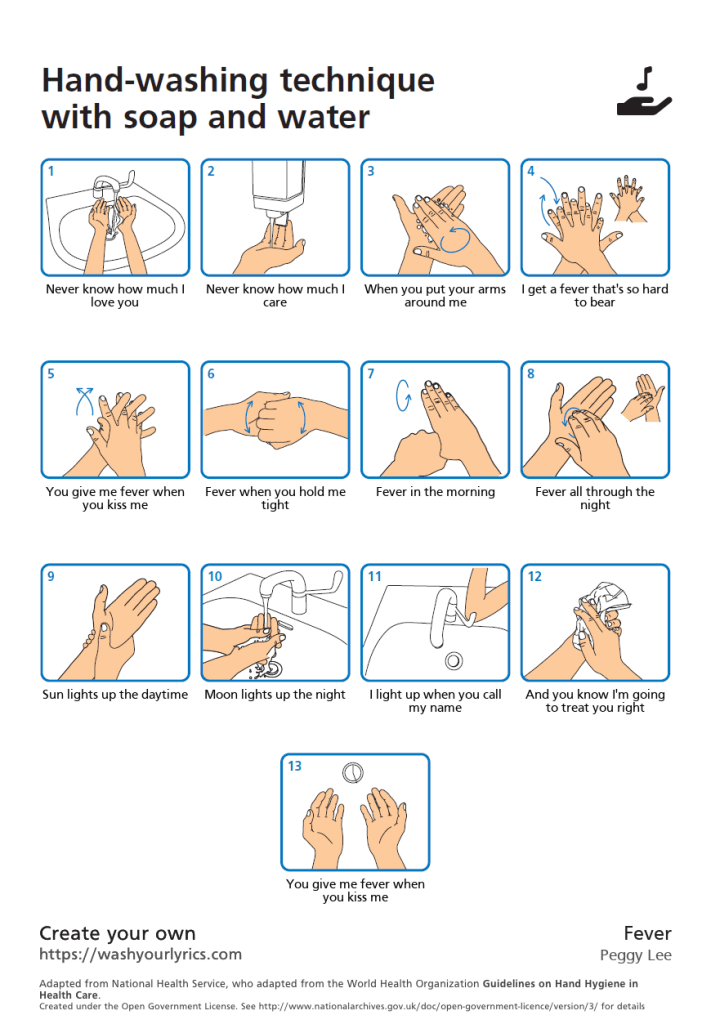
As we all know now, while social distancing and self-quarantining, the first, (repeated) middle, and last thing to do every day is wash your hands, wash your hands, and wash your hands. After riding droplets coughed or sneezed out by an infected person into your mouth–greatly mitigated by ~2 meters (~6 feet) of social distancing–the coronavirus’ favorite path into your body is from a public surface to your hands to your face. Some have noted that singing Happy Birthday twice roughly clocks the 20-30 seconds of thorough hand-washing necessary to mechanically remove viruses from your hands…but such a boring song! To sing something much cooler (and more appropriate?) while washing your hands correctly, enter a song title and artist at WashYourLyrics.com, and the site will generate a downloadable & printable “Hand-washing technique” poster with your chosen lyrics under infographics so you can wash and sing in sync. You may need to try different songs to get a desired fit: I first tried It’s the End of the World as We Know It by R.E.M., but got the intro lyrics rather than the more recognizable titular chorus. My next try worked much better: Fever by Peggy Lee

I first met US Astronaut and Navy Captain Scott Kelly while he was training in Moscow (Москва) and Star City (Звёздный городок) during my 4-year tour in Russia and Kazakhstan supporting the International Space Station (ISS). Scott’s a very cool and funny guy, definitely the sort you’d want to calmly handle a stressful situation in the air or space (or at the Volga Hotel in Moscow). A veteran of several Shuttle, Soyuz and ISS missions, he famously spent a year aboard ISS to study prolonged zero-G living over the kind of duration required for a human Mars mission someday, and later wrote the NY Times best seller, Endurance: My Year in Space, a Lifetime of Discovery. OK, Scott’s an impressive dude, but what does he have to do with coronavirus?! Hopefully very little beyond his NY Times article yesterday (21-Mar-2020): I Spent a Year in Space, and I Have Tips on Isolation to Share. Here’s a summary of his advice for being stuck at home (with a few of my comments interjected), based upon his experience being stuck in space, enticing you to read his full article:

  1. Follow a schedule for structure and normalcy, even when stuck at home. I still have my alarm set for every morning…admittedly an hour later than before since I don’t necessarily have to shave, shower, and dress for teleworking these days (teleworking is pants optional).
  2. But pace yourself, because we’re in this for the long haul, so make time for fun. I’m not sure Scott watching the 8th season of Game of Thrones twice qualifies as fun, but point taken.
  3. Go outside every day, because nature rules (forget that coronavirus is natural), and reduces stress. Even with social distancing, this is so much simpler to do on Earth than on the ISS!
  4. You need a hobby, an outlet that isn’t work or home maintenance. Scott took a digital guitar trainer and paper books to orbit (at how many $K/kg?!). I’m counting this blog as a hobby.
  5. Keep a journal, writing about your daily experiences and memories. Scott used his journal to write a popular book. Varya adores fancy Japanese paper journals, while I prefer digital apps–more searchable, cheaper, lighter, and take up far less space in my office (electrons are so tiny).
  6. Take time to connect with people remotely using your phone, tablet and/or computer. Isolation damages mental and physical health, actually lowering your immunity to viruses (oops), so this becomes more important the longer we self-quarantine.
  7. Listen to experts, not crazy internet sites, Facebook posts, YouTube videos, far right/left commentators, or even friends spewing fake remedies, cures, rumors, and bad advice. Scott recommends the John Hopkins Coronavirus Resource Center and WHO, and you should also listen to the CDC and your city & state health officials. Remember, social media like Facebook and Twitter are neither your friends nor real news, but merely entertainment, as informative and useful as pro wrestling, political propaganda, and cat videos.
  8. We are all connected, as is obvious when viewing the borderless Earth and its thin atmosphere from space, and when humans face a borderless pandemic (or alien invasion, planet-killer asteroid, etc.).
  9. Wash your hands–often, now singing along with your Fever-synched hand-washing poster!

So that’s what to do individually, but what should we as a species expect of this pandemic, and how should we fight it? With all due respect to Capt. Kelly, let’s turn to a real expert, epidemiologist Dr. Larry Brilliant (good career/name pairing; Dr. Fever would have been cooler). Brilliant helped eradicate smallpox and contain SARS (bird flu), and for many years has been arguing for a global early warning system for identifying and containing pandemics. Before consulting on the 2011 movie Contagion (now trending again in iTunes…go figure) to communicate this need to the public, he gave a prize-winning TED2006 talk, Help Me Stop Pandemics. Watch his TED Talk to learn how…

  • He helped WHO track down every case of smallpox in the world to eradicate this ancient lethal/scarring/blinding disease from the planet by 1980!
  • Early detection and early response using GPHIN helped conquer the SARS epidemic, “the pandemic that didn’t occur”, and are the keys to attacking…
  • The next big pandemic could spread worldwide in a few weeks, halt air travel, trigger global recession (or depression), cost the US economy $1-3 trillion, cause mass unemployment, and if it infects a billion people around the globe, kill up to 165 million of those according to models. He said this in 2006, but at least some of this is happening now: coronavirus spread worldwide in a month or two, airplanes are empty of passengers, markets are crashing, Congress is talking about more than $1 trillion in response/stimulus, and the infection rate continues to accelerate in the US and Europe. China curbed their infection rate by locking down large sections of the country, testing and tracing contacts of infected people. South Korea curbed their rate with rapid response including early mass testing, contact tracing and targeted quarantine. These examples show that mass testing/tracking and strict social distancing/isolation/quarantining can mitigate the spread of infections. So, perhaps we can slow it down enough to keep the peak well under a billion, at least until anti-viral drugs and vaccines for coronavirus (hopefully) are available next year.

Steven Levy–renowned tech writer/editor for Wired magazine and a host of other publications previously–published his interview with Larry Brilliant in Wired’s Science section last week (19-Mar-2020): The Doctor Who Helped Defeat Smallpox Explains What’s Coming. Here are a few take-aways from Steven’s interview with Larry, which you should read in its entirety when you get a chance:

  • Dr. Brilliant describes coronavirus as “the most dangerous pandemic in our lifetime,” but believes we can beat it with quick, strong action including a lot more testing.
  • The term novel preceding coronavirus simply means it’s new, so humans have no immunity to it (yet) and everyone is at risk until we survive infection and disease and (assuming it acts like other viruses) develop immunity, and/or develop a vaccine for worldwide distribution, likely next year.
  • He applauds current state government directions–self distancing/isolation, closing schools and some businesses, canceling events and gatherings–while criticizing the early slowness, denial and misinformation from some federal government officials lacking expertise.
  • Slowing down or flattening the curve does not decrease the total number of cases (the area under the curve), but rather postpones many of them (1) to avoid overwhelming hospital capacity (as in Italy), and (2) until we get a vaccine in 12-18 months.
  • Epidemiologist “Gold Ring” = combination of two factors to create herd immunity (70-80%):
    1. Enough of us have caught and survived the COVID-19 disease to become immune
    2. Vaccine developed, tested, mass produced and globally distributed
  • It will be hard for the US to follow the Chinese model of strict national lockdown, but we should be able to follow the South Korean model, including rapid mass testing to clearly understand where the virus really is and how fast it is spreading or receding in those areas.
  • US coronavirus response should be centralized under an experienced person like “Ebola Czar” Ron Klain, perhaps retitled Covid Czar, with the respect of public health and political communities. Dr. Tony Fauci of the NIH is the closest we have to that so far.
  • If you’re not worried, you’re not paying attention, but don’t be scared. We can slow down the virus and increase the odds of getting a vaccine or at least a prophylactic antivirus medication in time to avoid a much bigger disaster. This is not the zombie apocalypse. (Whew!)
  • N95 mask pores are 3 times wider than the virus. However, these masks still provide significant protection. Think of a huge bunch of football players trying to rush through a single door–a few will make it, but slowly, and many won’t. So, we need to get many more masks to health professionals, as they do help a lot.
  • Before we can beat this thing and the world starts looking normal again, we need 3 things:
    1. Measure virus distribution (mass statistically designed testing program)
    2. Vaccine or antiviral treatment that works
    3. Large numbers of people are identified as immune (herd immunity), especially in public professions that make us comfortable returning to schools, hospitals, etc.
  • Brilliant is encouraged by seeing civic engagement and volunteerism in the face of pandemic, especially among our youth (did he miss Spring Break videos showing thousands of idiots/carriers crowding beaches?!), and a huge influx of medical professionals putting in more hours than they’ve ever worked before.
  • Coronavirus is an equal opportunity infector that does not see red or blue states or pink or red hats. So, perhaps we’ll come out of this seeing ourselves more united, more alike than different (with less denial and ignorance of science and true expertise!).

(Next post: After Pandemic)

Tsarist Rubles

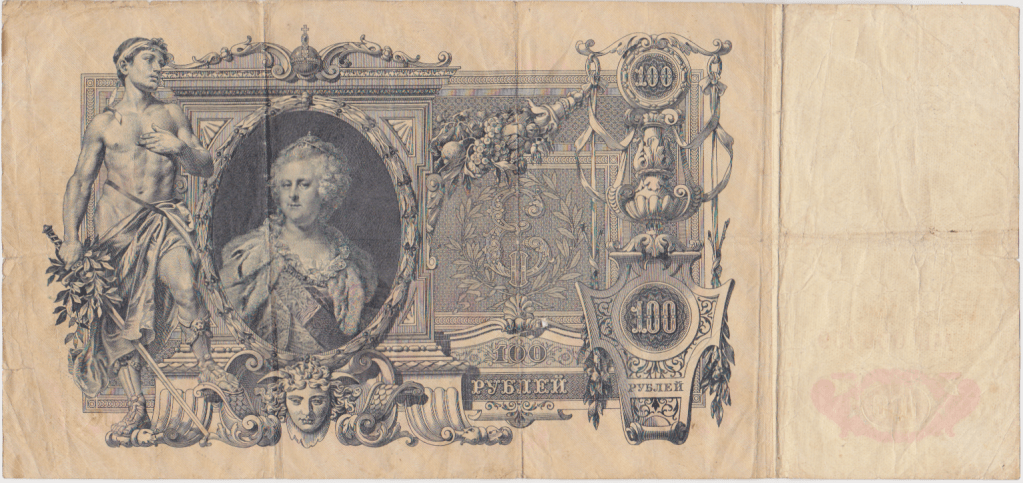
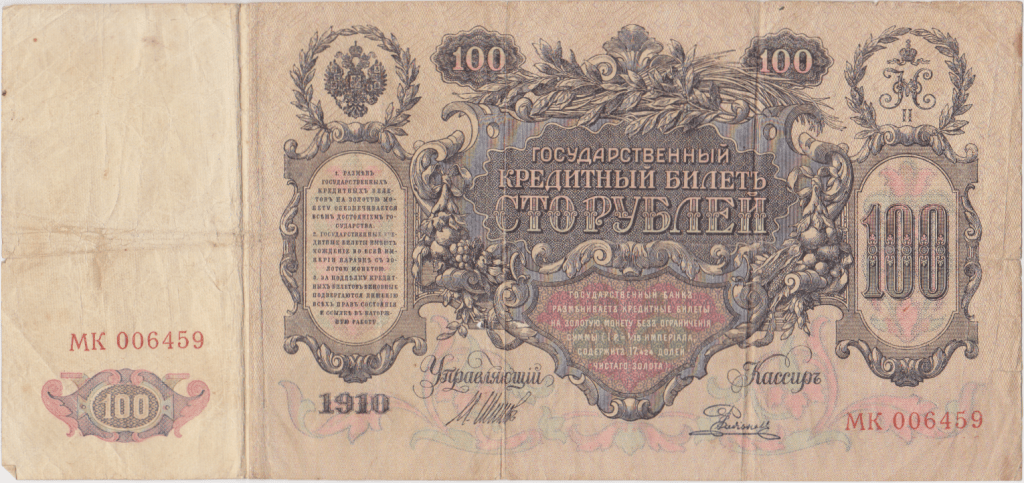
Varya spent the first half of this month in Russia getting her parents’ apartment ready to rent and visiting friends in Moscow and family in Saratov. She brought back some of her folks’ documents and keepsakes, including this 100 ruble note issued in 1910, perhaps handed down by one of their grandparents who grew up in the late Russian Empire, though Varya suspects her Dad simply picked it up somewhere as a collectible.

These days, 100 rubles would be worth about a buck fifty, but that’s not a valid conversion for this old money. The Russian ruble has been redefined/reset several times since the days of Tsar Nicholas II (whose “N II” crown seal is in the upper right corner), first by the Communists and a few more times during the 1990’s, a decade of financial and societal turbulence in Russia following the collapse of the Soviet Union. It’s more informative to read the reddish section in the lower center, which states this Russian government note may be exchanged for real gold at a rate of 15 rubles per imperial gold coin. So, this 100 ruble note would have been worth 100/15 or nearly 7 gold coins, a tidy sum for a member of the proletariat under the last Russian Tsar. Unfortunately, the Russian Revolution would render it worthless just seven years later.

Not unlike some of our US currency picturing fancy wigged dudes from a couple centuries past, this 110 year old ruble note featured Empress Catherine II, aka “The Great”, as she was still revered over a century after her death. The fancy E to the right of her image stands for Ekaterina, the Russian form of Catherine. At 26 cm (10.2″) wide and 12 cm (4.7″) tall, this is a big bill! So, the creases showing it was folded into a 1/8 area square are not surprising…how else would you carry this big, valuable paper around?!

Houston Holidays

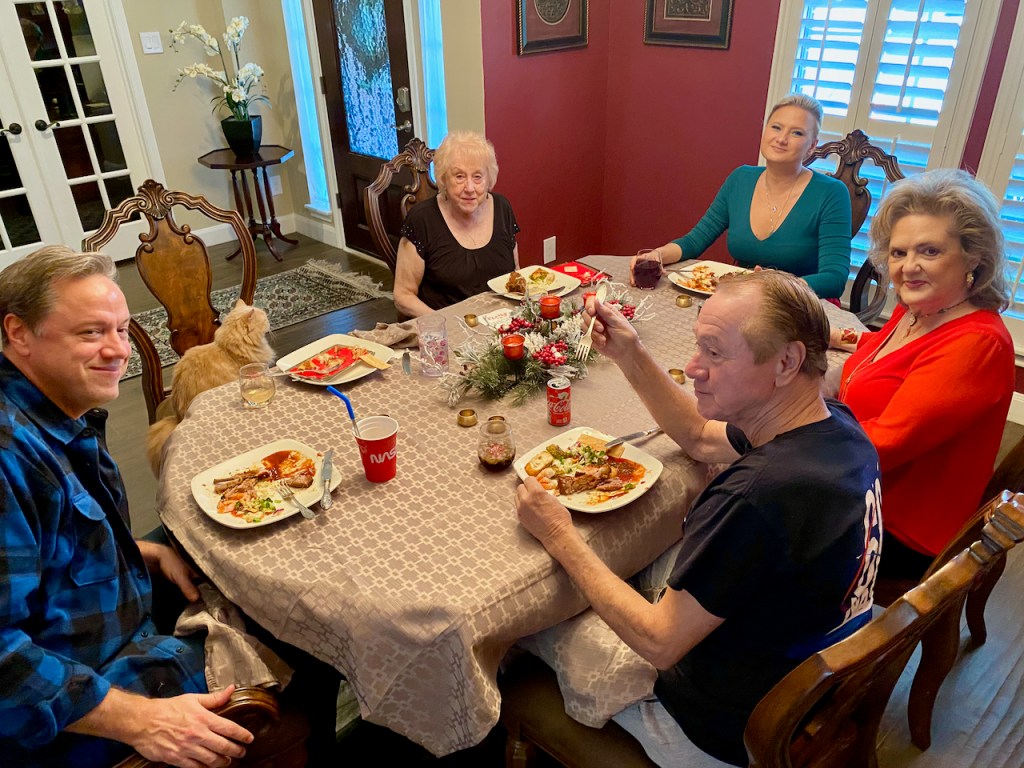
Since Mom sold her house over the summer, this was the first time in several years that we did not fly north for Christmas. As we searched for our long unused tree and decorations, we flew Mom south to our home, while Claire stayed nearby with Dad and Elaine. Varya spent Christmas day smoking tender ribs and cooking several appetizers and sides for an excellent Texas holiday dinner.

Ruby takes Claire’s empty seat

After dinner, it was time to open presents, much to the delight of Varya…

The best Christmas cooks do it in heels

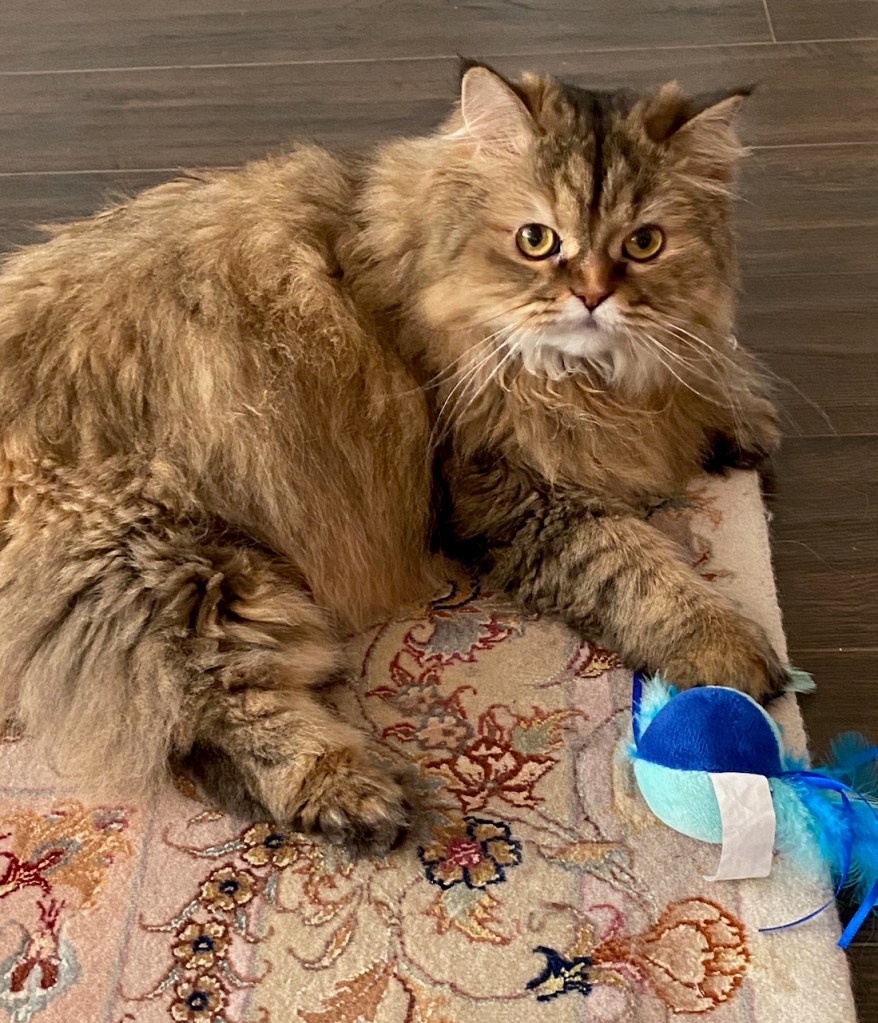
…and the Monkey, who couldn’t get enough of a catnip-laced fake bird.

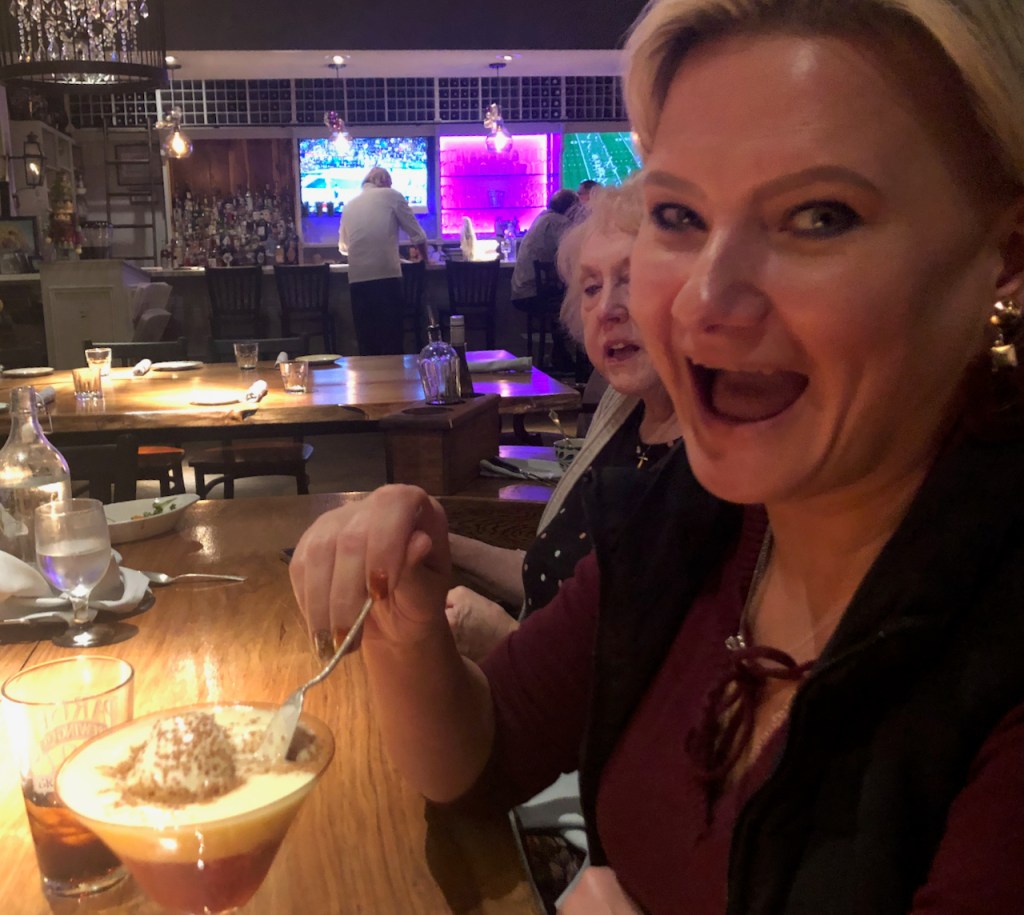
Every December, I have to remind myself to save some presents and make dinner reservations for the day after Christmas, Varya’s birthday. This year, she broke from her tradition of Americas or Perry’s steakhouse and chose Brasserie 1895 in Friendswood, where a Belgian Master Chef makes every visit deliciously surprising. The elk chops were the best game I’ve ever had!

The Brasserie 1895 chef, managers and waiter couldn’t have been nicer, though we stayed past closing time, with the restaurant nearly empty. They even treated Varya to a candle-lit eclair for her birthday.

On our way out, a Brasserie manager grabbed an ornament from their Christmas tree and gave it to Varya as another birthday present. Only when we got outside did we realize it was an ornamental slab of bacon. How did they know that’s what she wanted?!

No tree is complete without Christmas bacon

Turkey Day

Claire flew in from brisk NYC for a warm Thanksgiving week and weekends in Houston, joining us at Elaine’s & Dad’s Pearland home for Thanksgiving dinner. Elaine prepared an excellent table of some of the best turkey, corn bread stuffing, gravy, sweet potatoes, cranberry sauce, and green beans with new potatoes that I’ve ever had. With none of the food being less than completely delicious, overeating was unavoidable…even before diving into Claire’s cheesecake plus pecan and apple pies…with ice cream. Oh my. I digested over the next few hours like a python with a gobbler-shaped lump, and fixed the usual IT issues for the senior set, while Claire showed them how to rent a streaming movie on their Roku box…a tasty, productive and entertaining T-day.

Glad Grad!

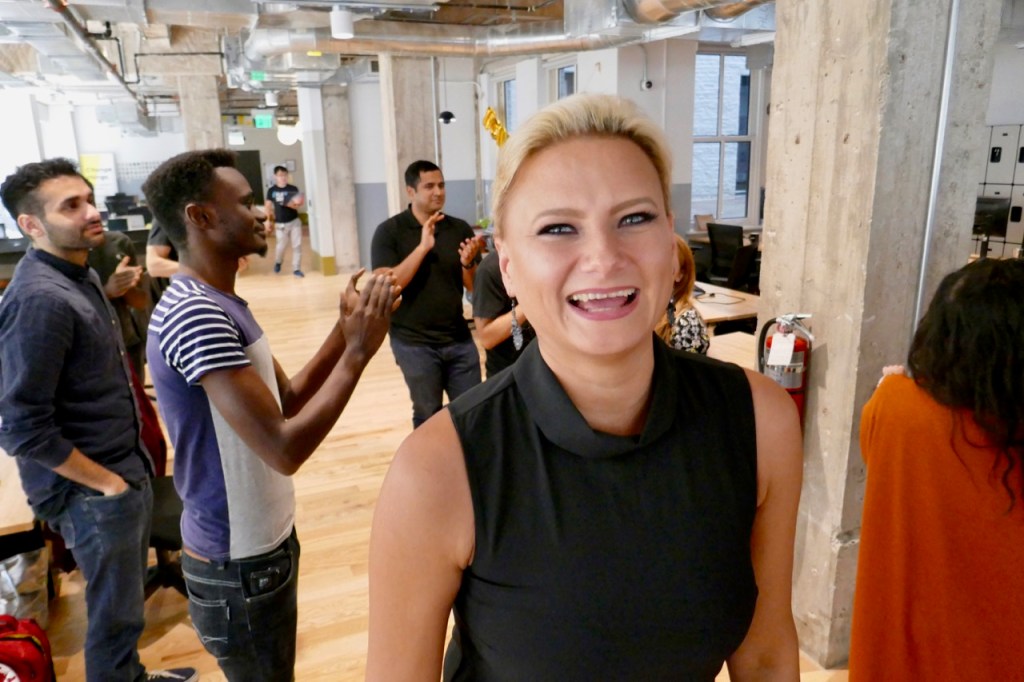
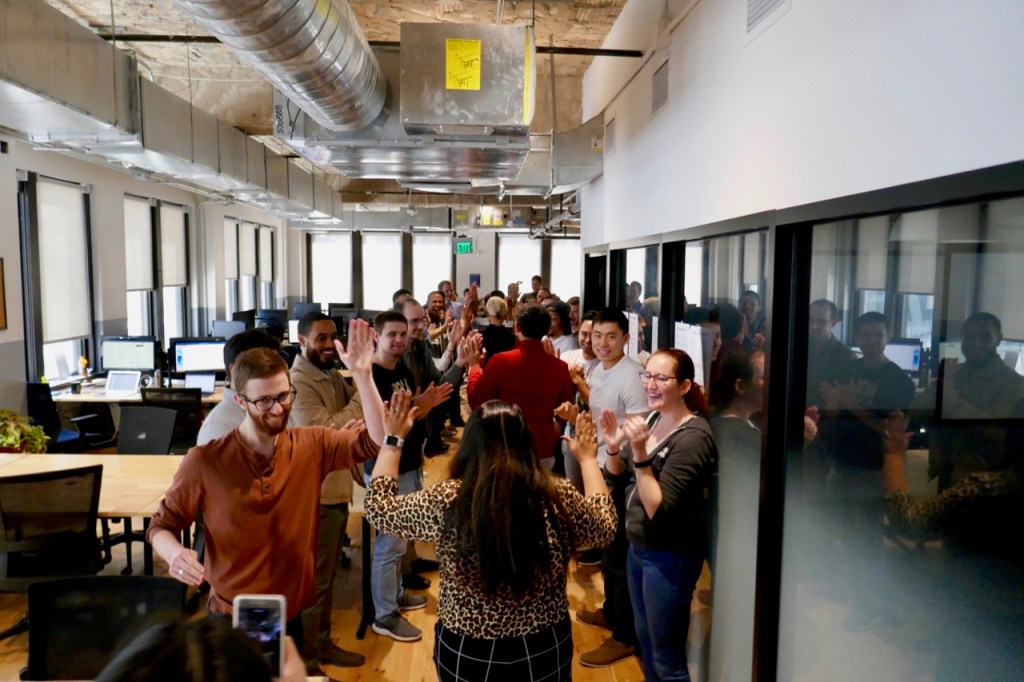
For 15 intensive weeks, Varya has been leaving the house every weekday at 7am, driving to a Metro park-n-ride lot, riding a bus to the Flatiron School in the center of downtown Houston to attend their software developer bootcamp from 9am-6pm, returning home after 7pm, then reading textbooks and working on labs and projects until bedtime. This past Friday, she graduated as a skilled full stack web site developer, and the joy on her face says it all…

Varya is a very glad grad!

When Varya posed the idea of attending a software bootcamp at the beginning of the summer, even after she explained what it was, my first reaction was “why?”. After all, she’d already earned a PhD in software engineering from the Institute for System Programming in the Russian Academy of Sciences, not to mention BS and MS degrees in software engineering from the Bauman Moscow State Technical University, the top technical university in Russia, and even an MBA in Finance along the way. In the US, she knocked out a couple Oracle certifications as a Java programmer. But, as she reminded me, all of these degrees and certs seemed to matter less to recruiters and interviewers than the multi-year gap in her employment history after she immigrated to the US. I listened in on a couple calls from job site recruiters who focused on that gap, then falsely promised to send her tests to confirm her software currency, though they never followed through. Frustrated by such treatment, and wanting to broaden her focus from scientific parallel programming in Java to modern web site development, she convinced me that Flatiron was the best path to a new, interesting career in the US.

New class ready to #ChangeThings

Not only did Flatiron teach Varya full stack web development skills, but they prepared her for employment by helping her update her LinkedIn and Github sites, technical blog and resume. They’ll spend the next few weeks giving her mock/practice interviews and help and advice applying for jobs. Flatiron claims a 97% success rate finding employment for their grads, so we’re confident that Varya–at the top of her class due to all of her prior software experience–will add to that percentage as an attractive candidate for them to present to employers.

I’m very proud of all the hard work she invested in the last 4 months, so impressed by the cool web site projects she completed, and excited to see where she takes this new endeavor. That excitement is only partially due to the new bike she said we’d buy once her new career is underway! 🙂

High fives for all new grads!