Cracks in interior tiles and walls and changes in shower drainage ultimately led us to hire a foundation inspector last year. As suspected, the front of our house was ~4″ down relative to the back. The fairly level rear half of the house and the lack of any visible cracks along the sides of the foundation showed how much a concrete slab can bend. The culprits were the big oak trees planted too close to the front of the house by developers a couple decades ago (a decade before we moved in), maximizing curb appeal at the expense of future foundation issues. In the midst of increasing heat and drought, our thirsty oaks were draining moisture from the soil beneath the slab, causing the soil to compress and sink along with the slab and house above it.
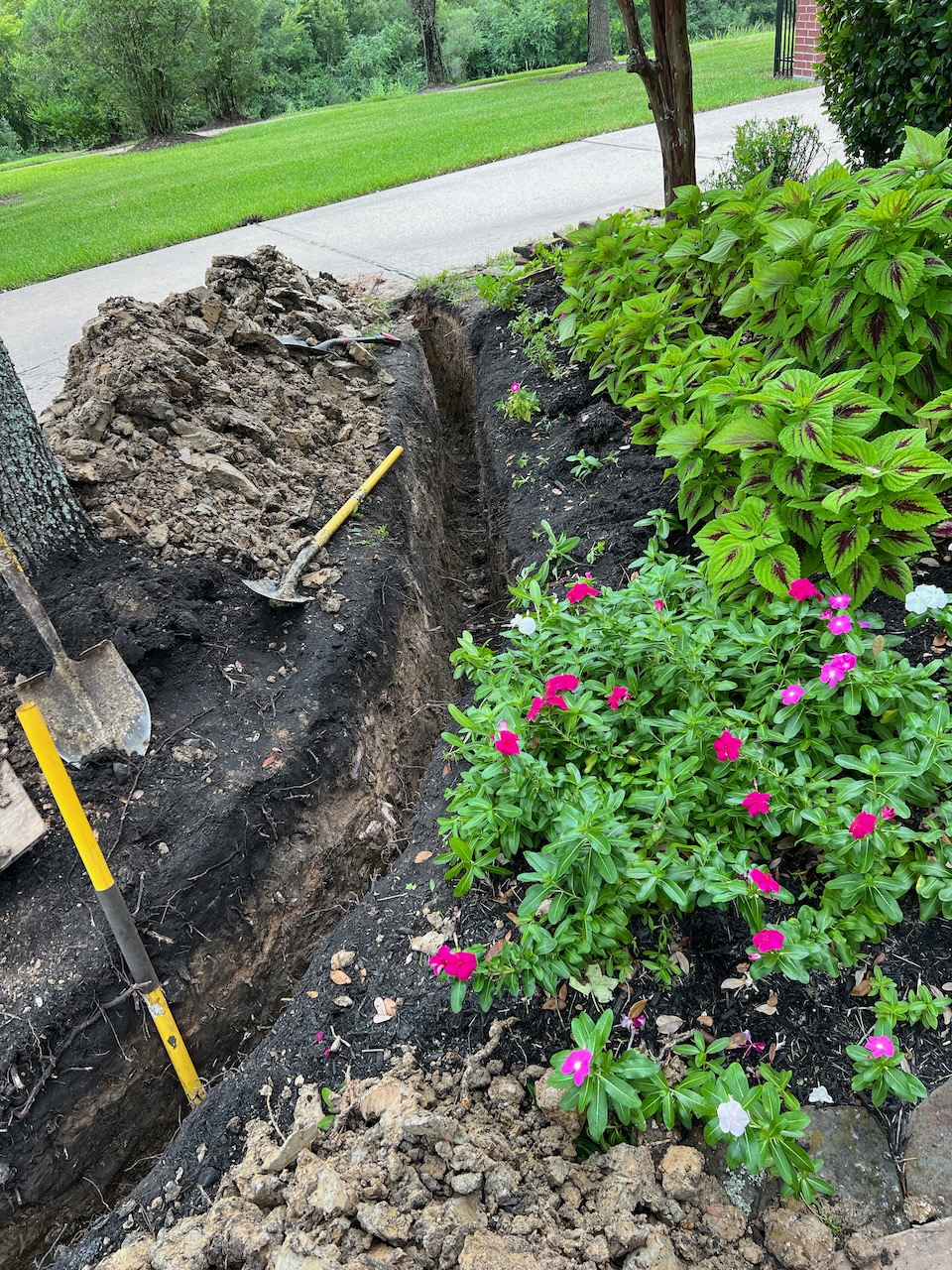
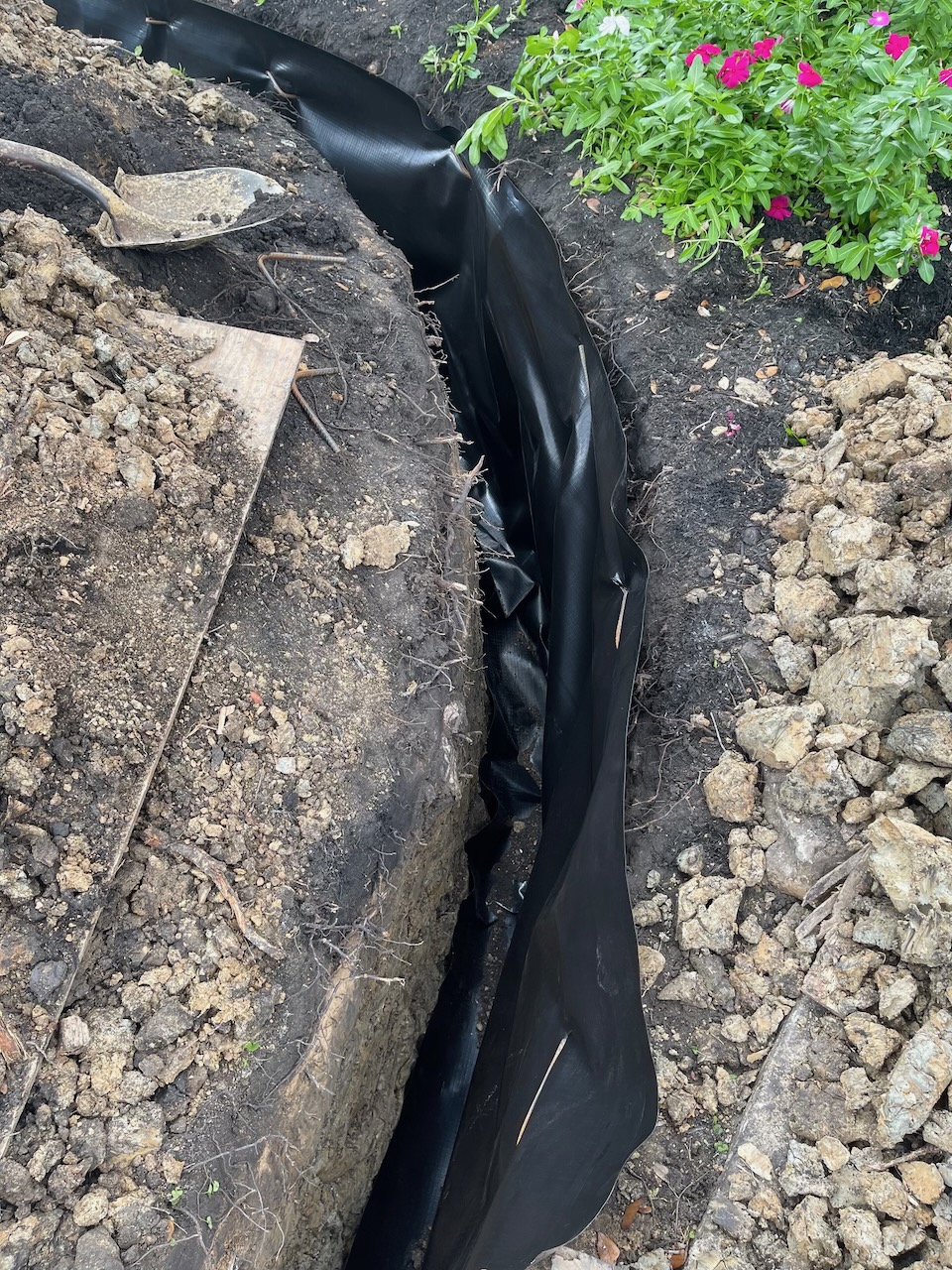
To shut off the drainage of the big oak roots while we researched foundation repair options, we had a pair of root shields/barriers installed between the two oaks and the house for $2K. Workers dug narrow trenches in 20′ arcs, cutting and removing large tree roots in the process, then inserted surprisingly thin plastic “walls” 3′ deep. No matter how thick the tree roots that were cut, the new roots that sprout from them start as hair-width filaments, easily diverted by the thin sheets of the root shields. The sheets need only be thick enough to stand up against the sides of the trenches while dirt is refilled, and just deep enough to divert new roots that might reach toward the slab rather than downward.

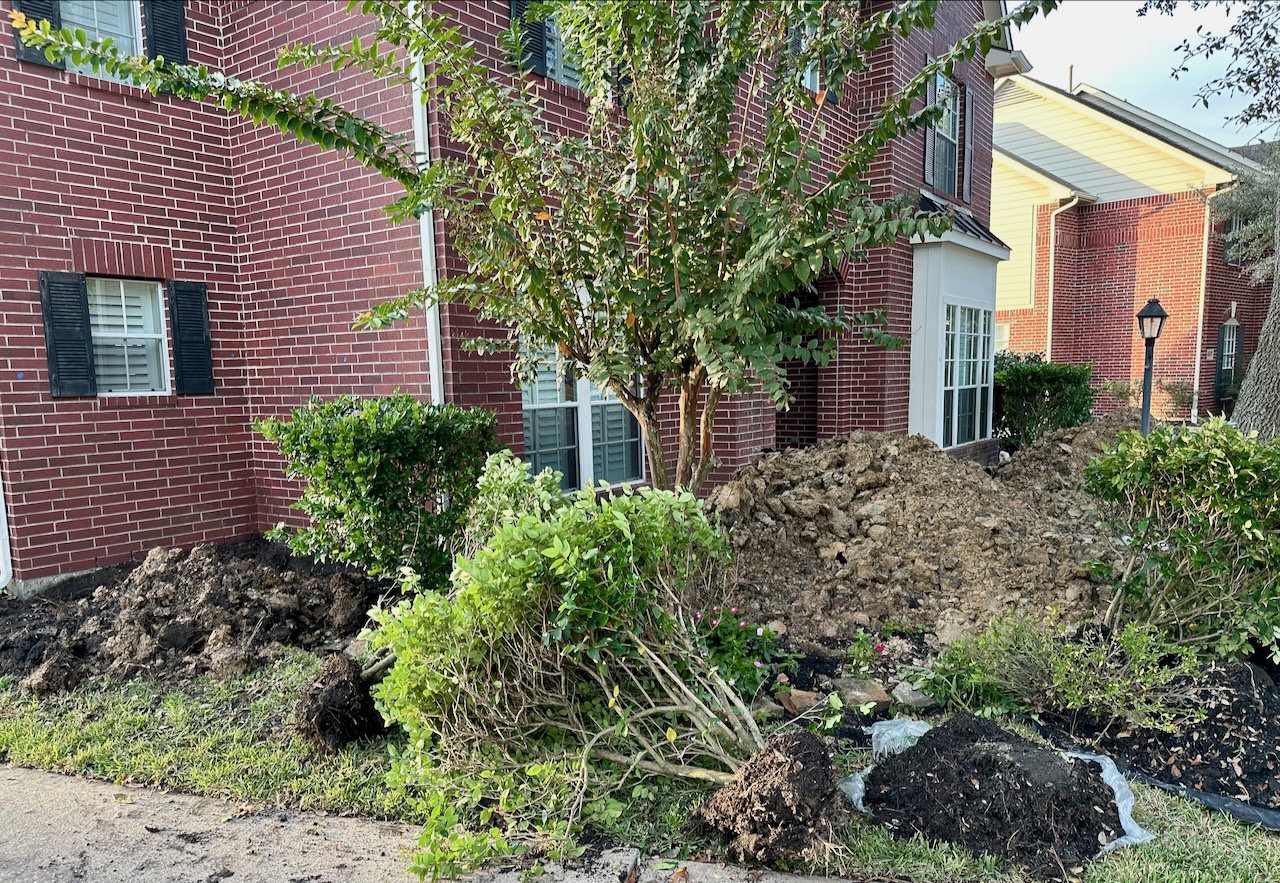
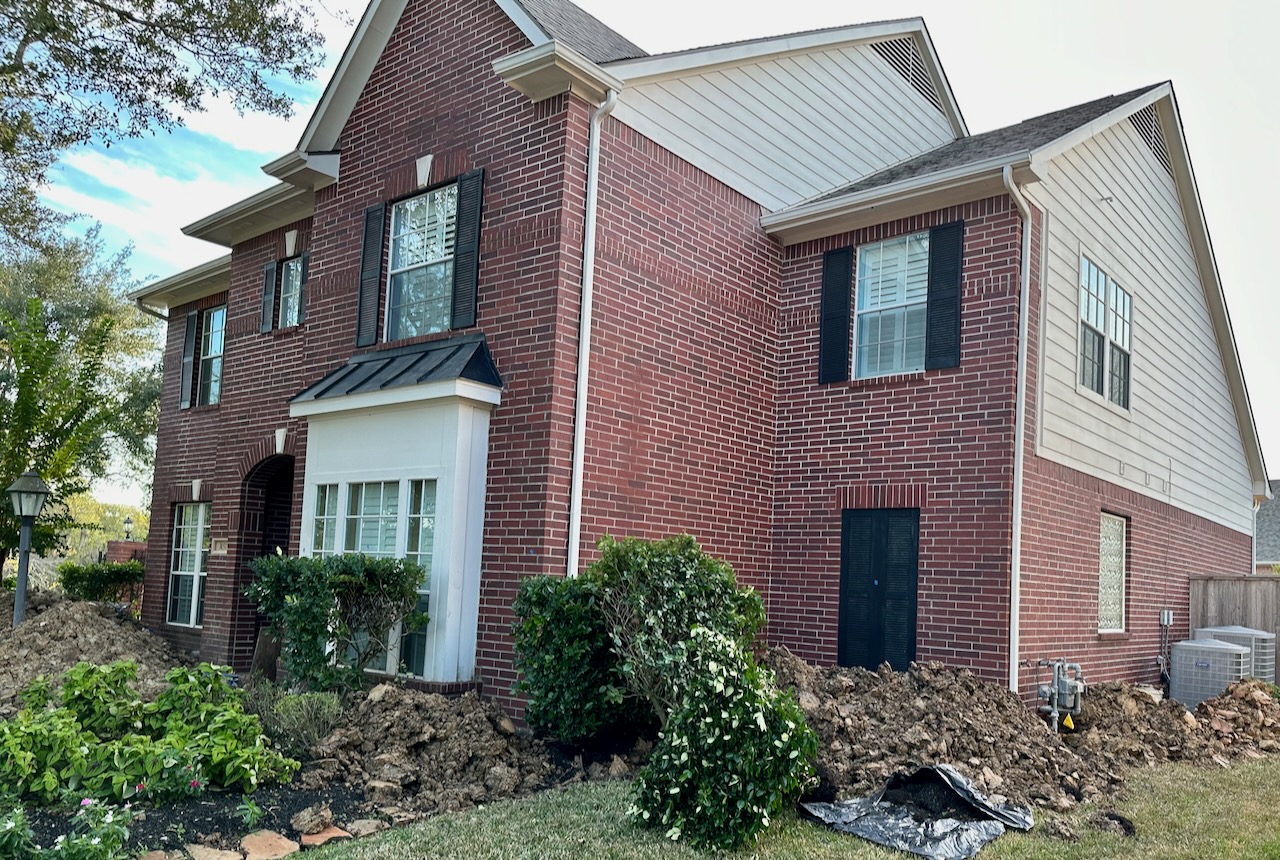
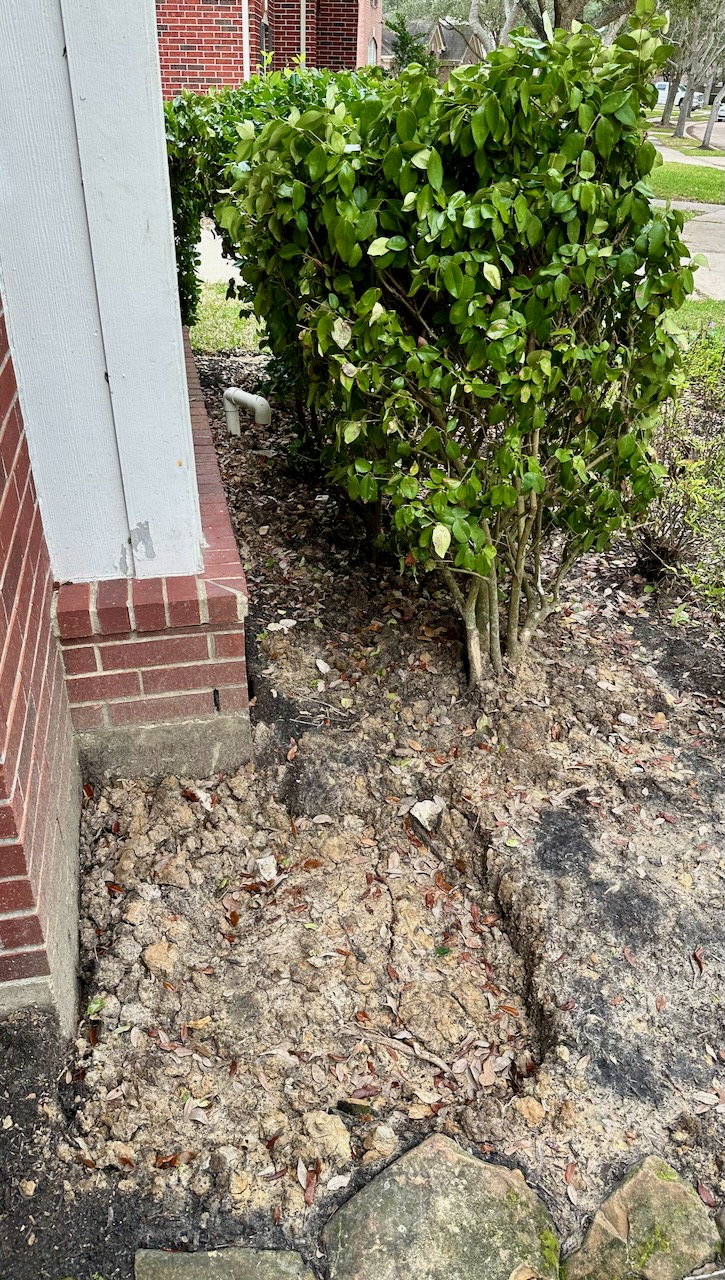
In November, we bit the bullet and hired a foundation repair company to install 35 pilings under the front of the house, 25 exterior and 10 interior, for $14K. They uprooted bushes and piled dirt in the front yard as they dug holes around the sides of the slab.
Inside the holes, they used the immense weight of the house to hydraulically press a couple dozen concrete cylinders into the soil in long stacks or pilings, down to the “hard clay” (though that sounds like an oxymoron, like “soft rock” or “clean coal”).
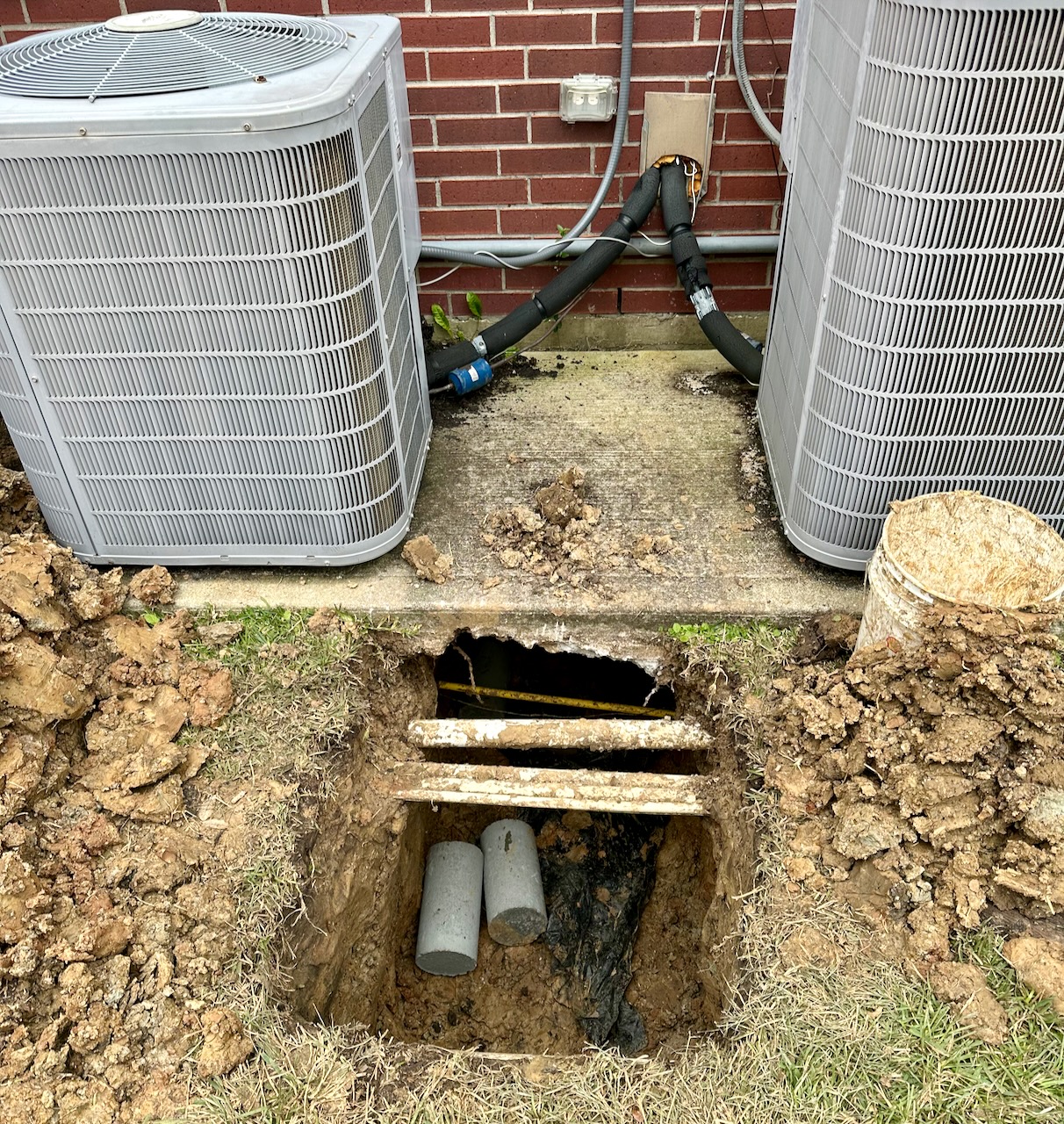
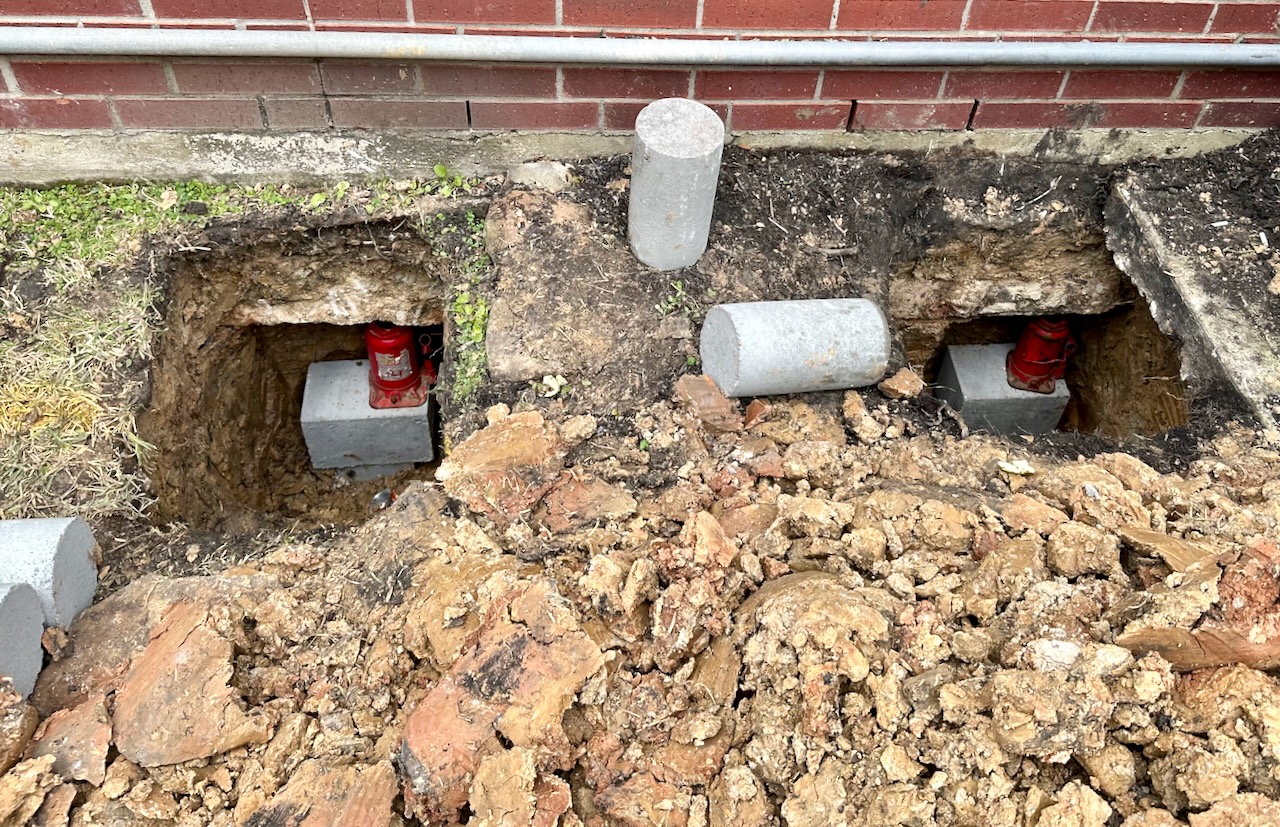
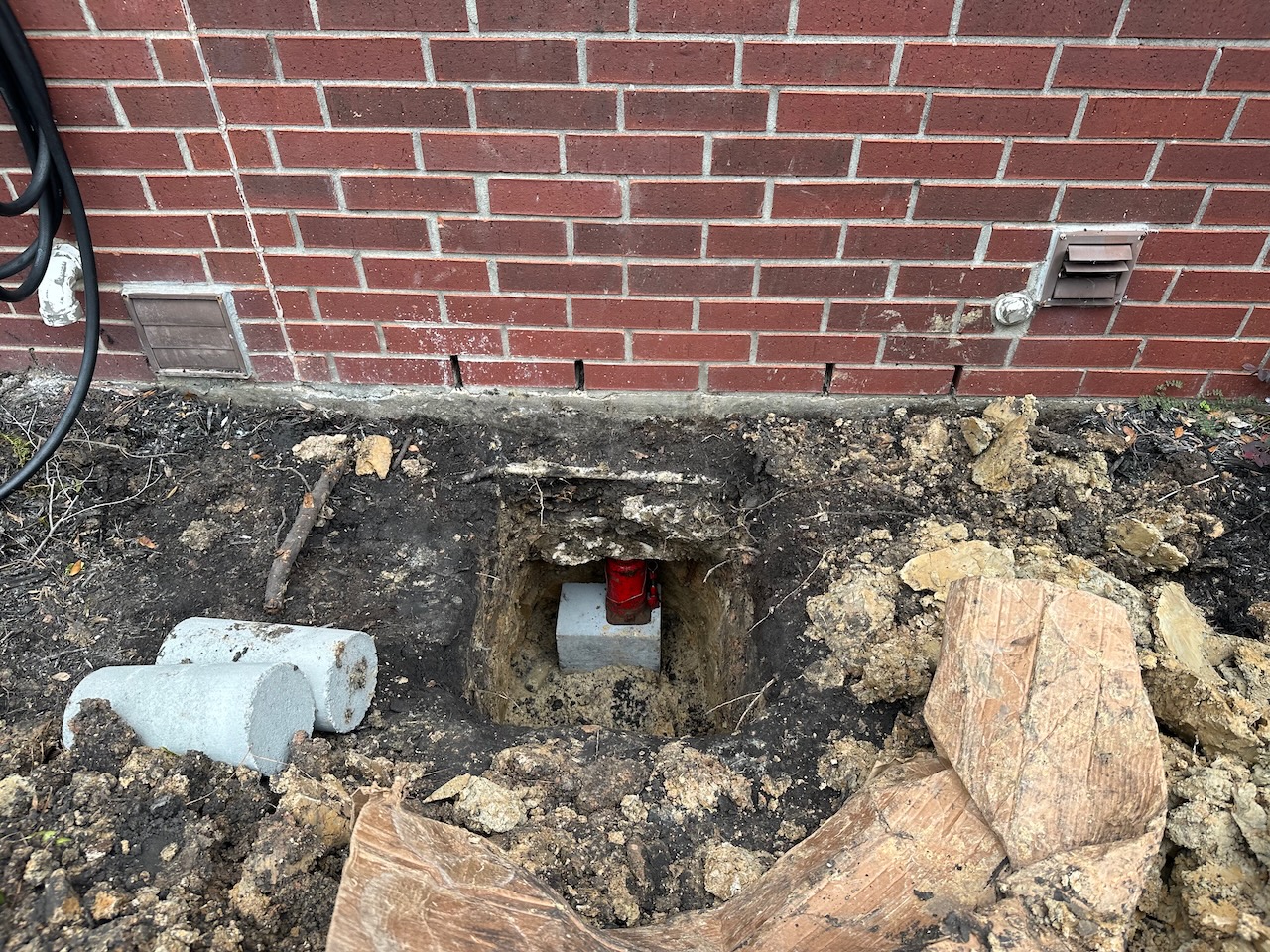
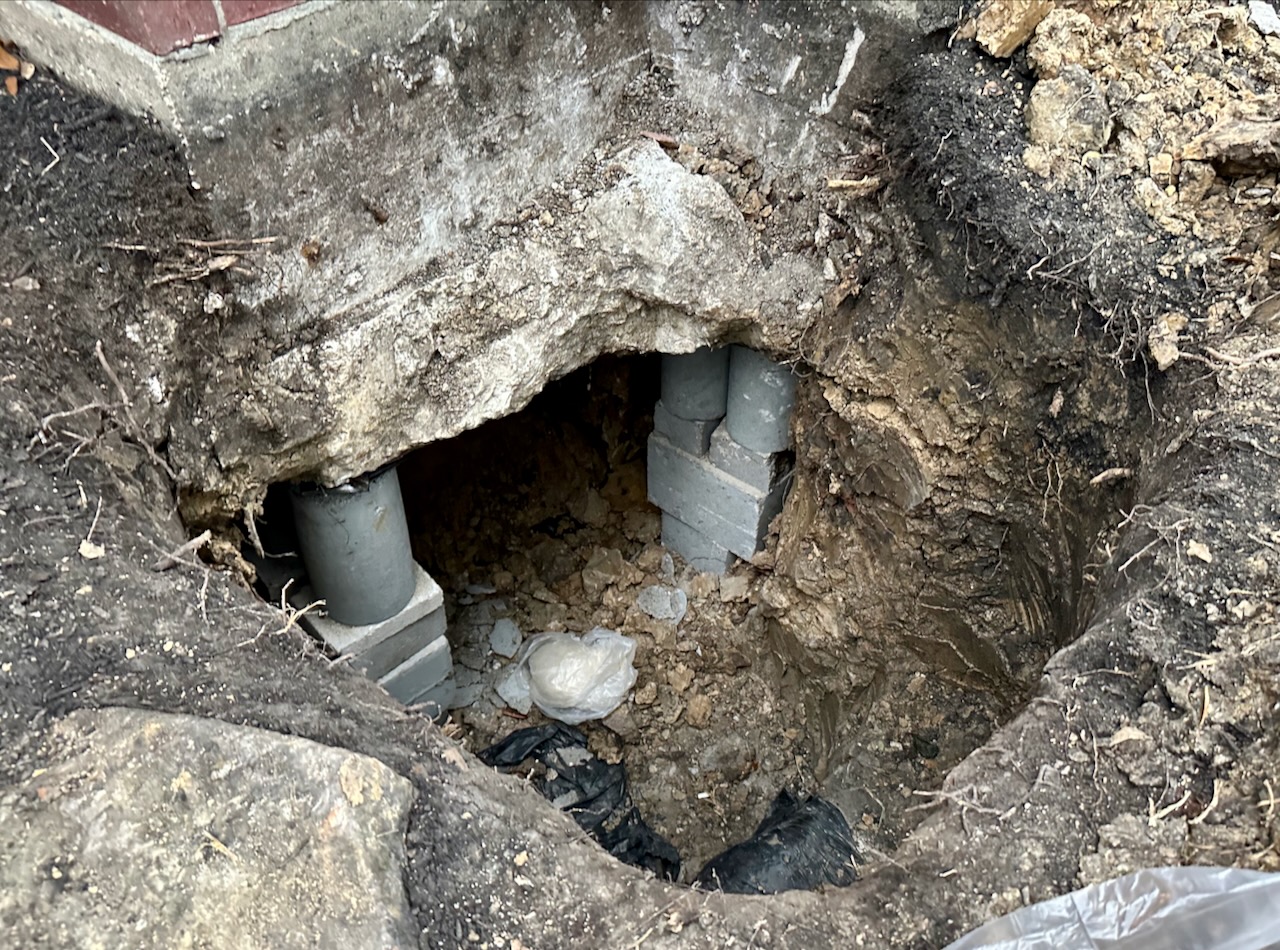
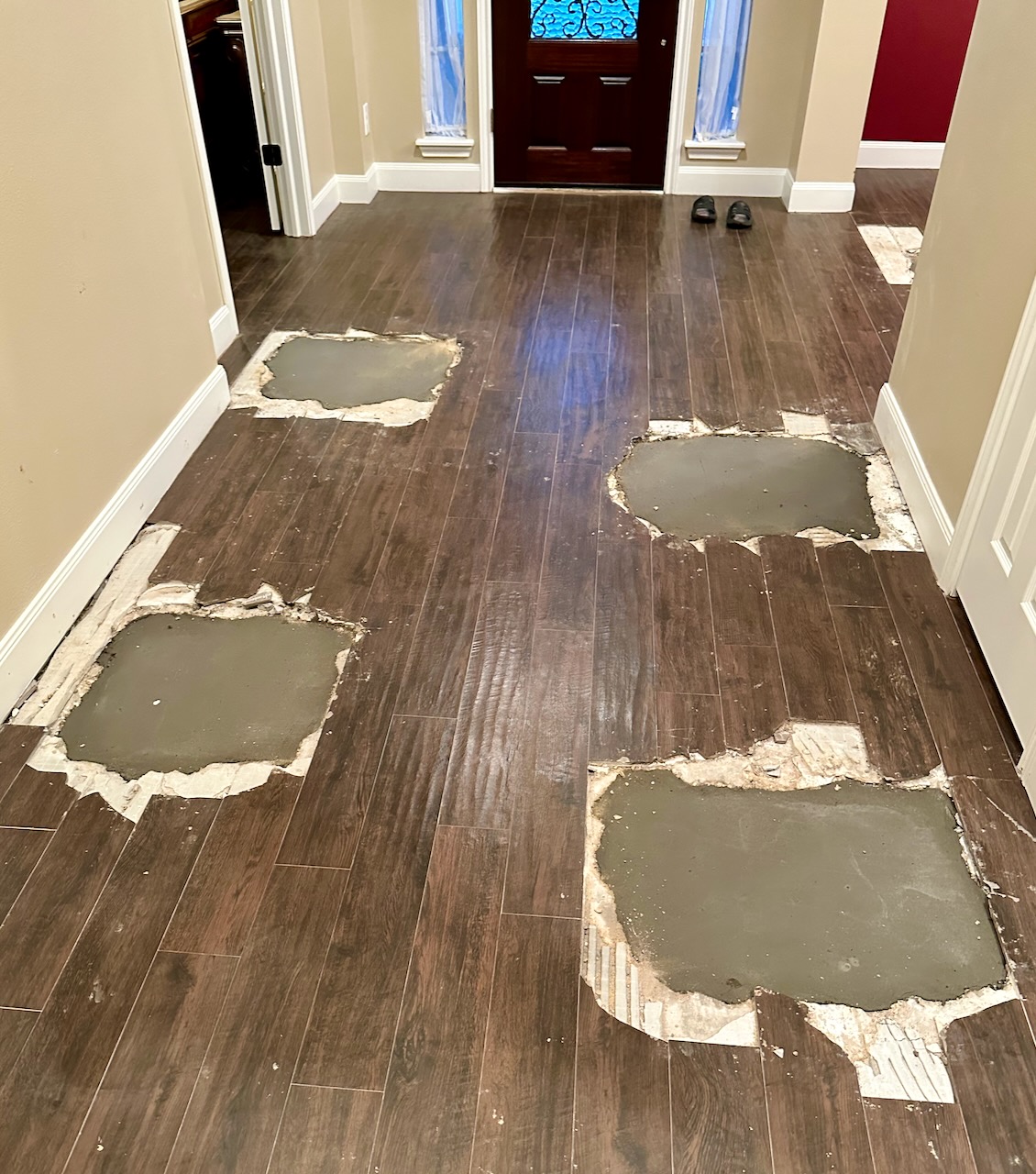
To avoid the immense expense and risk of constructing long tunnels beneath the house for the interior pilings, they jackhammered and dug straight through the floor…the “new” floor we’d just installed a few years earlier during post-flood reconstruction after Hurricane Harvey. 
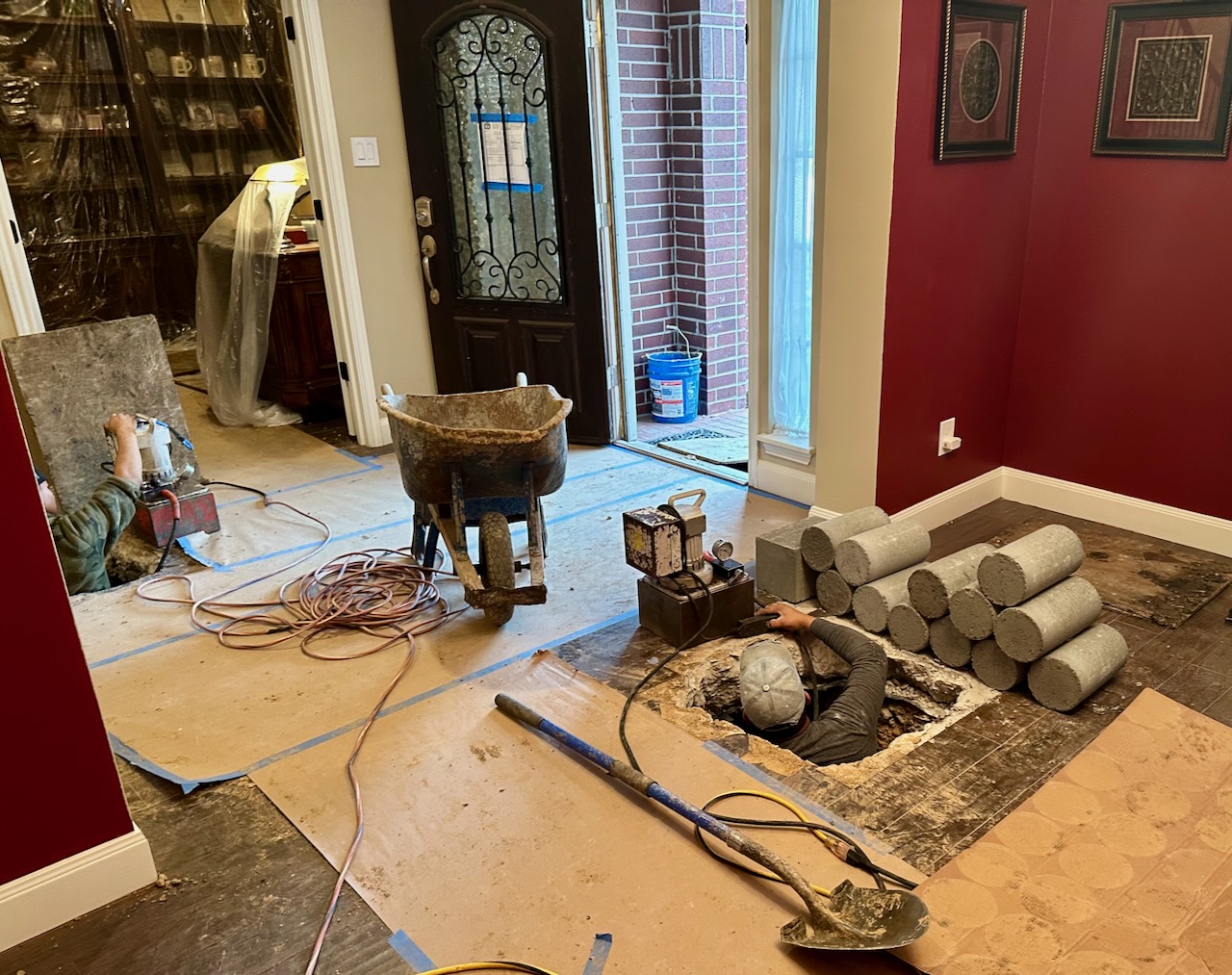


Digging and installing pilings took several days with some rain delays, but the actual lifting and leveling of the front half of the house took just minutes. All the cracks in the walls and gaps in exterior expansion joints closed quickly. Months before, I’d placed a little wooden hors d’oeuvre fork in the largest crack in the bedroom to gauge if the crack was slowly widening (clever), but unfortunately forgot to remove it prior to leveling, so it became embedded in the wall when the crack closed (not so clever). The monkeys were unfazed by the house moving around them.


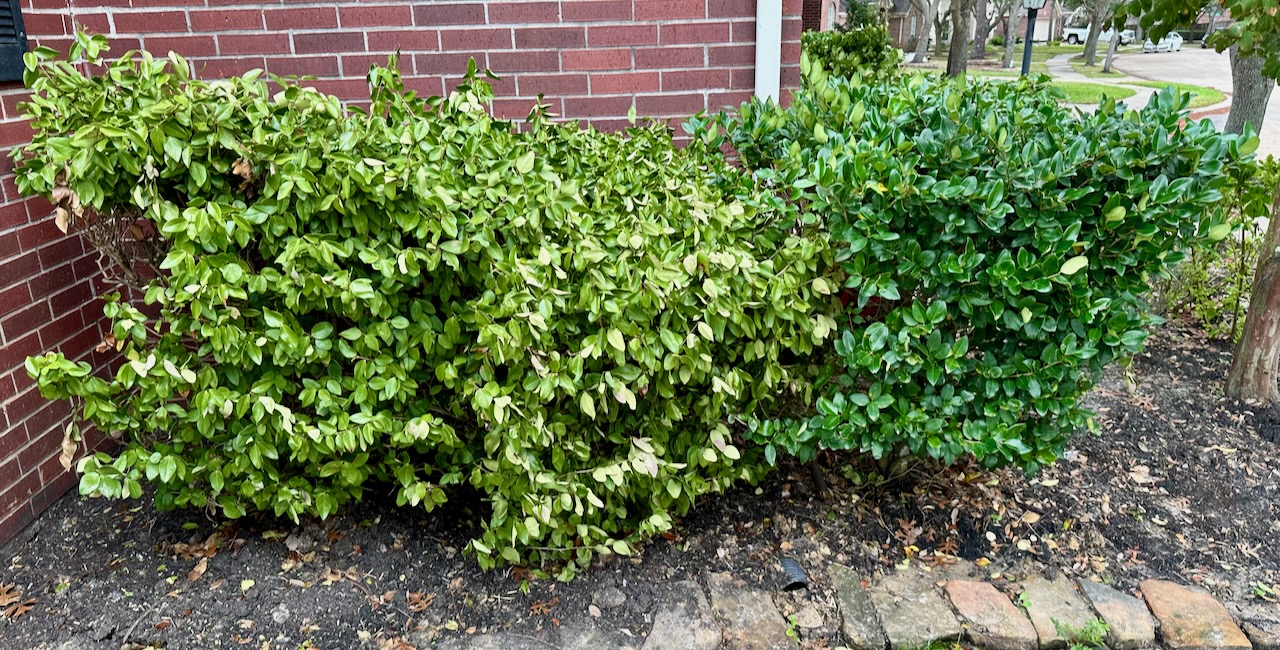
With pilings installed, house leveled and holes filled, the workers topped off the interior holes with concrete and left it to us to repair the floor…again. We discovered foundation repair guys were better at digging holes than refilling them, better at removing bushes than replanting them. About half of the unevenly replaced bushes died.
Other lessons learned during this all-too-typical adventure for Houston homeowners in the coastal plain?
- If your city was built in a swamp on clay, go ahead and pour piers with your slab when building a house, and plant oaks at least 30′ away (unless you’re a developer who knows you’ll be long gone by the time the 3rd owner has to deal with the slab foundation issues).
- We gathered a surprisingly wide range of bids for foundation repair, from $5K from a fly-by-night company to $65K for whole-house overkill. There was an interesting range of technologies as well, from simple concrete pilings to Ramjet’s helical threaded metal pipe piers derived from drilling (my fav of the tech options, but well over $30K).
- Once foundation repair is done, you get to spend a similar amount on flooring and wall repair and painting, landscaping to replace dead bushes and grass, repairing/replacing broken mortar in brick walls and broken/displaced hardy board siding, and, in our case, rebuilding a brick column wrapping the driveway gate pole that was leaning in the same dry soil. Soon, we’ll also replace driveway segments that have sunk like the front of the house due to the same oak trees.
- If your 1st floor is flooded and you have to reconstruct everything anyway, maybe go ahead and check your foundation before rebuilding, just so you don’t have to do it again a few years later (not that I’m bitter).
Silver lining: everything is level and looking new again, at least on the 1st floor. Now about that tired old carpet on the 2nd floor…
 Moonday